
Introduction
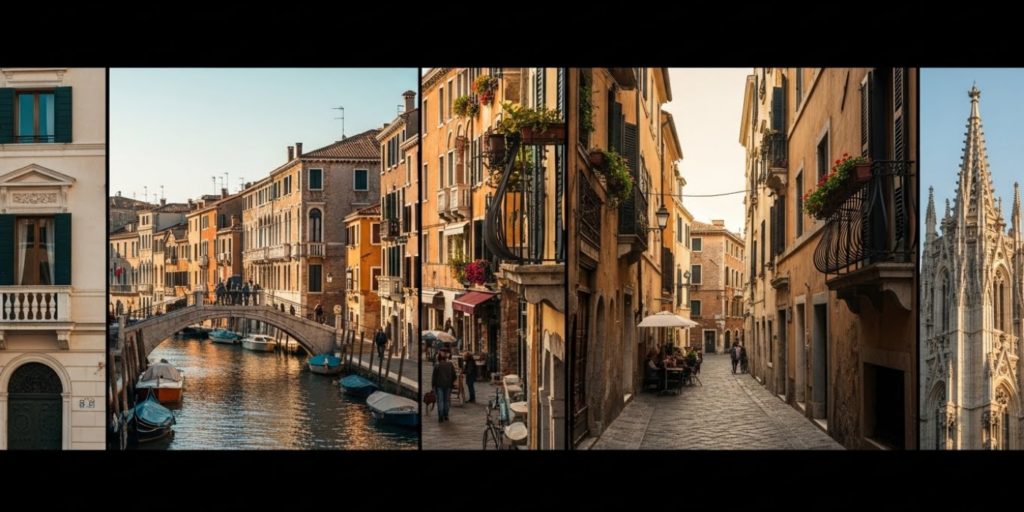
You’ve saved up, marked your calendar, and finally booked that ticket—your first trip to Europe is happening! But now comes the exciting (and slightly overwhelming) question: Where should you go? With dozens of countries, hundreds of cities, and endless possibilities—from fairy-tale castles to sun-drenched coastlines—it’s easy to feel paralyzed by choice.
The good news? Some European cities are especially welcoming to first-timers. They offer a smooth blend of easy navigation, English-friendly locals, iconic sights, reliable public transport, and just the right amount of “wow” without sensory overload. These destinations act as gentle gateways into a continent rich with history, culture, and culinary delights.
In this guide, we’ll walk you through six of the best European cities for first-time travelers—each chosen for its accessibility, safety, walkability, and unforgettable charm. You’ll discover what makes each place unique, what to see and do without rushing, and practical tips to make your trip stress-free. Whether you’re dreaming of café-lined streets, ancient ruins, or riverside castles, there’s a perfect starting point waiting for you. Let’s find it.
1. Paris, France – The Timeless Classic
Let’s start with the city that tops so many bucket lists: Paris. Often called the “City of Light,” Paris dazzles with its mix of grand architecture, world-class museums, and café culture that feels both elegant and effortlessly cool.
For first-timers, Paris is surprisingly manageable. The metro system is clean, efficient, and clearly marked in English, making it easy to hop from the Louvre to Montmartre in under 30 minutes. Most tourist-facing staff speak English, and signage is intuitive.
Don’t miss:
- A stroll along the Seine at sunset
- The Eiffel Tower (go early or book skip-the-line tickets)
- The charming streets of Le Marais
- A croissant from a local boulangerie—not a tourist trap
Why it works for beginners: Paris is compact enough to explore on foot in central districts, yet packed with enough variety to fill a week without boredom. Plus, its global fame means endless resources—guided tours, apps, and maps—tailored to new visitors.
Pro tip: Stay in neighborhoods like Saint-Germain or the Latin Quarter—they’re central, safe, and full of character without being overrun.
Paris might feel intimidating in movies, but in person, it’s warm, walkable, and ready to welcome you with open arms (and a glass of wine).
2. Amsterdam, Netherlands – Effortless and Bike-Friendly
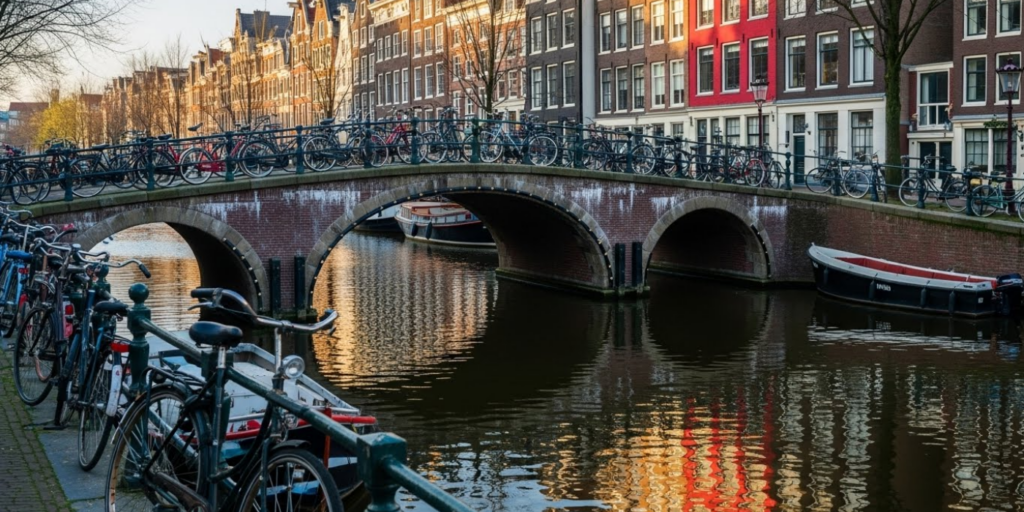
If you prefer canals over crowds and bicycles over subways, Amsterdam is your ideal European debut. This Dutch capital is famously flat, clean, and designed for easy exploration.
What makes Amsterdam beginner-friendly? Everything is close together. The historic center fits within a 20-minute walk, and the city’s famous canal ring—a UNESCO site—is best enjoyed by foot, bike, or boat. Rent a bicycle (like the locals!) or hop on a tram; both are stress-free ways to get around.
Top experiences:
- Cruise the canals at golden hour
- Visit the Van Gogh Museum or Rijksmuseum
- Wander the Jordaan district’s narrow streets
- Try stroopwafels fresh from the market
Bonus: The Netherlands consistently ranks among the most English-proficient non-native countries in the world (EF English Proficiency Index). You’ll have no trouble asking for directions or ordering dinner.
Practical note: While Amsterdam has a reputation for its Red Light District, the city is extremely safe, and tourist areas are well-patrolled. Stick to main streets at night, and you’ll feel perfectly comfortable.
Amsterdam offers a relaxed, human-scale introduction to Europe—where efficiency meets charm.
3. Prague, Czech Republic – Fairytale Beauty on a Budget
For travelers who crave old-world magic without breaking the bank, Prague is a dream come true. With its cobblestone alleys, Gothic spires, and the iconic Charles Bridge arching over the Vltava River, Prague looks like it leapt straight from a storybook.
And unlike Western European capitals, Prague remains affordable. A hearty meal costs $8–12, museum tickets are reasonable, and public transport is cheap and reliable. This makes it perfect for first-timers watching their budget.
Must-sees:
- Prague Castle (the largest ancient castle complex in the world!)
- Old Town Square and the Astronomical Clock
- A walk across Charles Bridge at sunrise (to avoid crowds)
- A traditional Czech goulash with dumplings
Why it’s great for beginners: The city center is compact and pedestrian-only in many areas, reducing traffic stress. English is widely spoken in tourism zones, and the locals are generally helpful to polite visitors.
Insider tip: Avoid restaurants with menus in five languages right next to major attractions—head a few blocks away for authentic, wallet-friendly eats.
Prague proves that Europe’s most enchanting cities don’t have to cost a fortune.
4. Lisbon, Portugal – Sun, Sea, and Soul
Imagine golden light, pastel buildings tumbling down hills to the Atlantic, and the scent of grilled sardines in the air. That’s Lisbon—Europe’s sunniest capital and one of its most inviting.
Lisbon combines relaxed Mediterranean vibes with rich history and stunning viewpoints (called miradouros). It’s less overwhelming than Rome or Barcelona but just as full of personality.
Highlights include:
- Riding the iconic Tram 28 through historic neighborhoods
- Exploring the bohemian streets of Alfama
- Tasting pastéis de nata (custard tarts) at the famous Pastéis de Belém
- Day-tripping to Sintra’s palaces or Cascais’ beaches
First-timer perks: Lisbon is safe, clean, and English is commonly spoken, especially among younger locals. The city’s layout—though hilly—centers around key tram and metro lines, making navigation straightforward.
Bonus: Portugal is one of Europe’s most affordable Western countries. You can enjoy a seafood dinner with wine for under $20.
Lisbon doesn’t just welcome you—it hugs you with warmth, flavor, and ocean breeze.
5. Vienna, Austria – Elegance Without the Ego
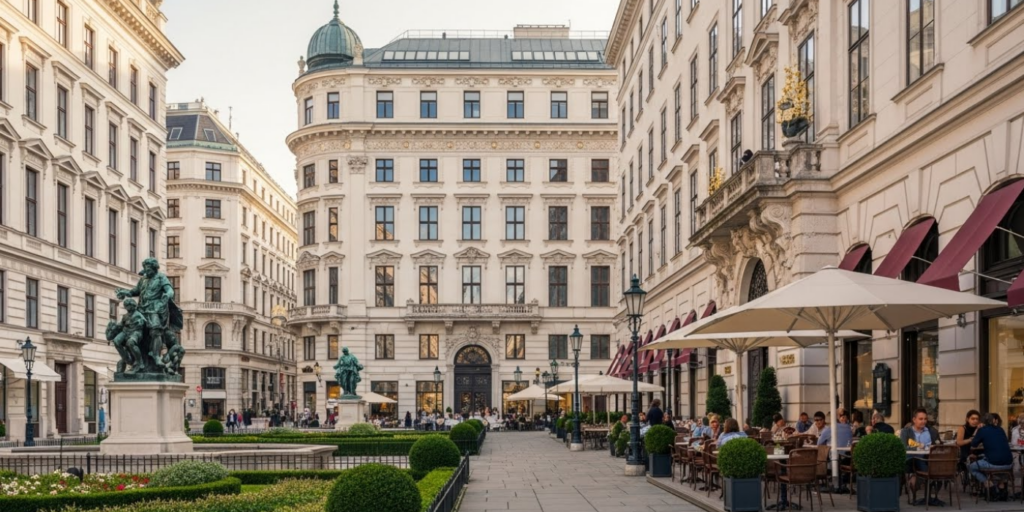
If you’d like a taste of imperial grandeur without the chaos of bigger capitals, Vienna is a refined and orderly choice. This city blends Baroque palaces, classical music heritage, and café culture into a calm, cultured experience.
Vienna consistently ranks as one of the most livable cities in the world (Mercer Quality of Living Survey)—and that comfort extends to visitors. Streets are clean, public transport is punctual, and everything runs with quiet efficiency.
Don’t skip:
- Schönbrunn Palace and its gardens
- A coffee and slice of Sachertorte at a traditional Kaffeehaus
- St. Stephen’s Cathedral in the heart of the Innere Stadt (Old Town)
- A classical concert in a historic hall
Why it works for new travelers: Vienna is compact, safe, and easy to navigate via U-Bahn (subway) or on foot. Locals may seem reserved at first, but they’re polite and helpful once you ask (and many speak excellent English).
Fun fact: Vienna is home to the world’s oldest zoo (Tiergarten Schönbrunn, founded in 1752)—a surprisingly delightful stop for all ages.
Vienna offers sophistication without snobbery—a perfect intro to Central Europe.
6. Edinburgh, Scotland – Dramatic, Walkable, and Full of Character
For those who love history, literature, and dramatic landscapes, Edinburgh delivers big—on a very manageable scale. The Scottish capital is essentially two cities in one: the medieval Old Town (steeped in Gothic mystery) and the neoclassical New Town (a UNESCO site in its own right).
What makes Edinburgh ideal for first-timers? It’s incredibly walkable. You can hike up Arthur’s Seat at dawn, explore the Royal Mile by midday, and sip whisky in a cozy pub by evening—all without touching public transport.
Must-dos:
- Climb Arthur’s Seat for panoramic views
- Tour Edinburgh Castle perched on Castle Rock
- Wander through Victoria Street (the real Diagon Alley inspiration)
- Visit the National Museum of Scotland—free and fascinating
Practical perks: English is, of course, the main language. The city is safe, compact, and full of free or low-cost attractions. Plus, Scottish hospitality is famously warm—even if the weather isn’t!
Tip: Visit in August for the Edinburgh Festival Fringe (the world’s largest arts festival), but book early. For quieter charm, try May or September.
Edinburgh proves that big experiences come in small, rugged packages.
Making Your Choice: What Matters Most to You?
All six cities offer something special—but the “best” one depends on your travel personality.
- Love art and romance? → Paris
- Prefer bikes and canals? → Amsterdam
- Want fairytale charm on a budget? → Prague
- Crave sun and seafood? → Lisbon
- Seek elegance and order? → Vienna
- Dream of castles and cliffs? → Edinburgh
Remember: Your first European trip doesn’t need to be “everything.” Pick one city, slow down, and savor it. You’ll come home not exhausted, but inspired—and already planning your next adventure.
Conclusion
Europe doesn’t have to be intimidating for first-time travelers. With the right destination, your debut can be smooth, memorable, and full of joy. Whether you’re sipping espresso in Paris, biking along Amsterdam’s canals, or watching the sunset over Prague’s rooftops, these cities offer the perfect blend of accessibility, beauty, and cultural richness to welcome you into the continent with open arms.
So take a deep breath. Pick the city that makes your heart skip a beat. Pack your most comfortable shoes, a reusable water bottle, and a curious spirit. Your European adventure is closer than you think—and it starts with just one step across the cobblestones.
We’d love to hear from you! Which of these cities is calling your name? Or have you been to one and fallen in love? Share your dream destination or travel tips in the comments below—and if this guide helped you feel more confident about your first European trip, pass it on to a friend who’s ready to explore. The world is waiting!

James Anderson is a passionate enthusiast of travel, fine dining, financial freedom, and personal performance. Always seeking new experiences and challenges, he believes in living life fully while continuously improving himself. For James, exploring new destinations, savoring unique culinary experiences, and striving for independence are not just hobbies—they are a lifestyle built on curiosity, growth, and the pursuit of excellence.