

Introduction
You’ve just arrived in Paris, exhausted but excited, and you spot a charming café near the Eiffel Tower with a menu in English and photos of every dish. It looks perfect—until the bill arrives, and you realize you just paid $28 for a croque-monsieur that locals get for €7 three blocks away. Sound familiar?
Tourist traps aren’t just about overpriced souvenirs or staged photo ops—they’re experiences that leave you feeling ripped off, disconnected, and far from the authentic soul of a city. The good news? With a few smart strategies, you can dodge the gimmicks and uncover the real magic that makes travel unforgettable.
In this guide, we’ll show you how to spot—and sidestep—common tourist traps in major cities like Rome, Tokyo, New York, Barcelona, and Bangkok. You’ll learn practical tips for finding local favorites, reading subtle cultural cues, using technology wisely, and even turning “trap zones” into opportunities. Whether you’re a first-time traveler or a seasoned globetrotter, these insights will help you travel deeper, smarter, and more joyfully. After all, the best souvenirs aren’t keychains—they’re genuine connections and memories you’ll cherish forever.
1. Recognize the Red Flags of a Tourist Trap
The first step to avoiding traps is knowing how to spot them. While not every busy restaurant or street vendor is a scam, certain signs consistently signal “tourist pricing” or low authenticity.
Common red flags:
- Menus with photos of every dish (especially laminated ones in 10 languages)
- Aggressive touts (“Best gelato in Rome!” “Free bracelet!”)
- Location, location, location: If it’s within 100 meters of a major landmark, prices are likely inflated.
- “Tourist menus” that don’t list prices or offer “special deals” only to visitors
- Overly uniform souvenirs: Think Eiffel Tower keychains made in China, not Paris.
Why it matters: These spots aren’t just expensive—they often deliver lower quality because they rely on volume, not repeat customers. A local pizzeria in Naples survives on neighborhood loyalty; a restaurant next to the Colosseum survives on foot traffic.
Pro tip: Walk just two to three blocks away from major attractions. You’ll often find quieter streets with better food, friendlier service, and half the price.
2. Eat Like a Local: Finding Authentic (and Affordable) Food

Food is one of the easiest places to fall into traps—but also one of the most rewarding to get right.
Do this instead:
- Look for places filled with locals, especially during lunch hours. If the staff are eating the same food, that’s a great sign.
- Use apps like Google Maps (not just Yelp)—filter by “most reviewed” and scroll past the 5-star hype to read recent, detailed reviews.
- Seek out “menu del día” (Spain), “pranzo” (Italy), or “set lunch” deals—these are daily specials for workers, not tourists.
- Visit food markets: La Boqueria in Barcelona is touristy, but Mercado de San Miguel has local stalls. Better yet, try Mercat de Santa Caterina—less crowded, more authentic.
Real example: In Rome, tourists line up for €20 carbonara near the Pantheon. Locals eat the same dish for €9 at Trattoria Da Enzo in Trastevere—a 15-minute walk away.
Bonus: Learn a few food phrases in the local language. Even “Buongiorno, posso vedere il menu?” (Good morning, may I see the menu?) can earn you a warmer welcome.
3. Rethink Souvenirs: Skip the Trinkets, Seek the Meaningful
That “I ❤️ Paris” mug might seem cute—until you realize you’ve seen it in airports from Lisbon to Los Angeles. Mass-produced souvenirs rarely reflect the true spirit of a place.
Instead, look for:
- Handmade goods from local artisans: Pottery in Oaxaca, leather in Florence, textiles in Bangkok.
- Edible souvenirs: Local spices, chocolate, olive oil, or tea—unique, consumable, and often cheaper than trinkets.
- Vintage or secondhand finds: Flea markets like Marché aux Puces in Paris or Chatuchak in Bangkok offer one-of-a-kind treasures.
- Experiences over objects: A cooking class, a pottery workshop, or a concert ticket creates a memory that lasts longer than a snow globe.
Pro tip: Ask shop owners, “Is this made here?” or “Who made this?” If they can’t answer, it’s likely imported.
Why it matters: Buying local supports real people—not global supply chains. Plus, your friends will be far more impressed by a handwoven scarf than another fridge magnet.
4. Use Technology Wisely—Don’t Let It Replace Instinct
Apps and social media can be powerful tools—but they can also herd you into the same crowded spots everyone else is posting about.
Smart tech habits:
- Use Google Maps’ “Popular Times” feature to avoid overcrowded hours at museums or cafes.
- Follow local bloggers or Instagram accounts (not just influencers)—search “[City] food” or “[City] hidden gems.”
- Turn off geotags—they often lead you to “Instagrammable” spots that lack substance.
- Download offline maps so you can wander without constantly checking your phone.
But don’t rely solely on tech: Some of the best discoveries happen when you get “lost.” Put your phone away, walk down a side street, and follow the smell of fresh bread or the sound of live music.
Analogy: Think of your phone as a compass—not the entire map. Let it guide you to a neighborhood, then let your senses take over.
5. Be Wary of “Free” Offers and Too-Good-to-Be-True Deals
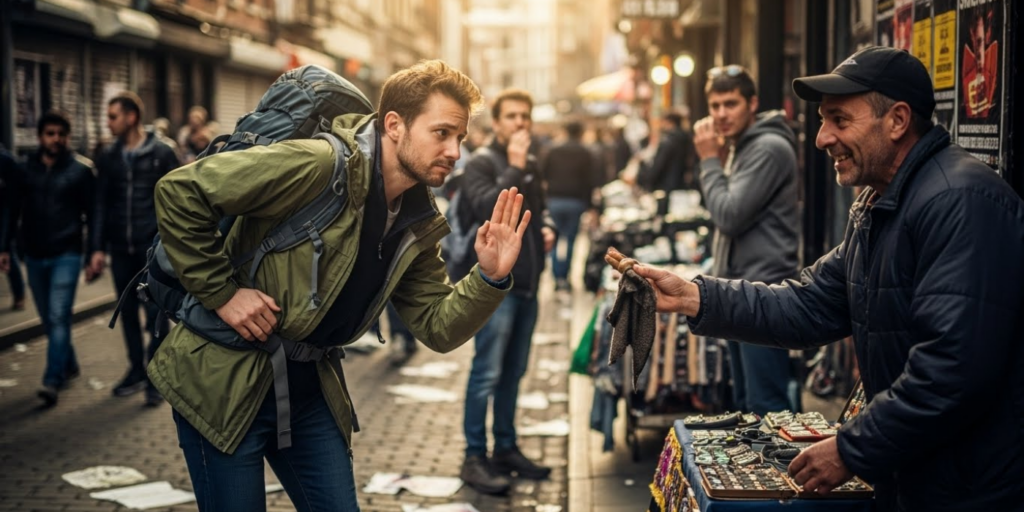
From “free” friendship bracelets to “discounted” guided tours, scams often start with something that seems harmless or generous.
Common scams to watch for:
- The “free” gift: Someone approaches with a flower, bracelet, or petition—then demands money once it’s on you.
- Fake petitions: Distraction tactic while an accomplice picks your pocket.
- Unlicensed “guides” outside museums who charge exorbitant fees or take you to commissioned shops.
- Currency scams: “Your bill is $50” (but they show you 50,000 in local currency—worth $5).
How to respond:
- Politely but firmly say “No, thank you” and keep walking. Don’t engage, even to be polite.
- Only book tours through official websites or reputable platforms like GetYourGuide or Tiqets.
- Carry small bills to avoid overpaying or getting shortchanged.
Remember: Genuine locals rarely approach tourists to give things away. Kindness exists—but so does opportunism.
6. Visit Major Attractions—But Do It Right
Avoiding all tourist spots isn’t realistic (or desirable!). You should see the Louvre, the Colosseum, or Times Square—but how you experience them makes all the difference.
Smart strategies:
- Go early or late: Arrive at the Louvre at 9 a.m. or visit the Sagrada Família at sunset—fewer crowds, better photos.
- Book tickets online in advance: Skip-the-line passes save time and reduce stress.
- Hire a local guide for 1–2 hours: A knowledgeable guide can share hidden stories and help you bypass crowds.
- Combine visits: Many cities offer city passes (like the Paris Museum Pass) that include transport and entry—calculate if it’s worth it for your itinerary.
Mindset shift: It’s not about avoiding famous sites—it’s about experiencing them intentionally, not passively.
7. Talk to Locals—The Ultimate Anti-Tourist Tool
The single best way to avoid traps? Ask real residents for advice.
Start with hotel staff, baristas, or shopkeepers (not taxi drivers who may be on commission). Simple questions like:
- “Where do you like to eat on your day off?”
- “Is there a park or café you’d recommend?”
- “What’s something most tourists miss?”
Why it works: Locals know the hidden gems, seasonal tips, and neighborhood changes that apps can’t capture. Plus, showing genuine interest often leads to unexpected invitations—a home-cooked meal, a local festival, or a rooftop view most never see.
Real story: In Lisbon, a traveler asked a bookstore owner for lunch ideas. He drew a map to a tiny tasca down an alley—where the owner’s aunt served the best bacalhau in the city. No website, no sign—just word of mouth.
Conclusion
Avoiding tourist traps isn’t about being cynical—it’s about being curious, respectful, and intentional. The goal isn’t to “outsmart” tourism, but to connect more deeply with the places you visit. By recognizing over-commercialized zones, seeking local voices, and embracing slow exploration, you’ll trade superficial checklists for meaningful travel.
Remember: the heart of any city beats in its side streets, neighborhood markets, and everyday rhythms—not just its postcard icons. And often, the best experiences cost nothing but a smile and an open mind.
So next time you’re in a major city, take a breath, step off the main drag, and let the real adventure begin.
We’d love to hear from you: What’s the best local tip you’ve received while traveling? Or a tourist trap you learned to avoid the hard way? Share your story in the comments below—and if this guide helped you rethink your next trip, pass it on to a fellow explorer! Because the world is richer when we travel like guests, not just visitors. 🌍✨

James Anderson is a passionate enthusiast of travel, fine dining, financial freedom, and personal performance. Always seeking new experiences and challenges, he believes in living life fully while continuously improving himself. For James, exploring new destinations, savoring unique culinary experiences, and striving for independence are not just hobbies—they are a lifestyle built on curiosity, growth, and the pursuit of excellence.