

Introduction
You’ve done the hard part: picked your dream destination, planned your itinerary, and even figured out what to pack. But just as you’re about to book your hotel, you see the price—and your heart sinks. Why does the same room cost $120 on one site and $210 on another? Why did the price jump $50 overnight?
Here’s the secret: hotel pricing isn’t fixed—it’s a dynamic game of supply, demand, timing, and strategy. And with the right moves, you can consistently score better rates without sacrificing comfort or location.
In this guide, we’ll reveal proven, practical tactics that savvy travelers use to book hotels for less—every single time. From knowing when to book (hint: it’s not always “as early as possible”) to using price-tracking tools, leveraging loyalty programs, and negotiating like a pro, these tips work whether you’re booking a budget hostel, a boutique inn, or a luxury resort.
No gimmicks, no coupon codes that never work—just smart, actionable advice that puts real money back in your travel budget. Let’s turn that “ouch” into “aha!”
1. Timing Is Everything: When to Book (and When to Wait)
Many travelers assume “the earlier, the cheaper.” But that’s not always true—especially for last-minute deals or seasonal destinations.
General rules by trip type:
- Domestic U.S. trips: Book 1–3 months in advance for the best balance of availability and price.
- International trips: Aim for 2–5 months out—enough time to compare, but not so early that you miss flash sales.
- Last-minute getaways: Use apps like HotelTonight 1–7 days before arrival—hotels slash prices to fill empty rooms.
Seasonal insight:
Prices spike during holidays, festivals, and major events (like Coachella or Comic-Con). If your dates are flexible, shift by just 2–3 days—you could save 30% or more.
Real example:
Mark wanted to visit New Orleans during Mardi Gras and saw rates at $400/night. He shifted his trip by four days to the week after the festival—and paid $149 for the same hotel.
Pro tip: Use Google Flights’ “Date Grid” (yes, for hotels too!) or Kayak’s “Flexible Dates” tool to compare prices across a whole month at a glance. Sometimes Tuesday is $80 cheaper than Saturday—with no other difference.
2. Compare Across Platforms—But Book Direct When It Makes Sense
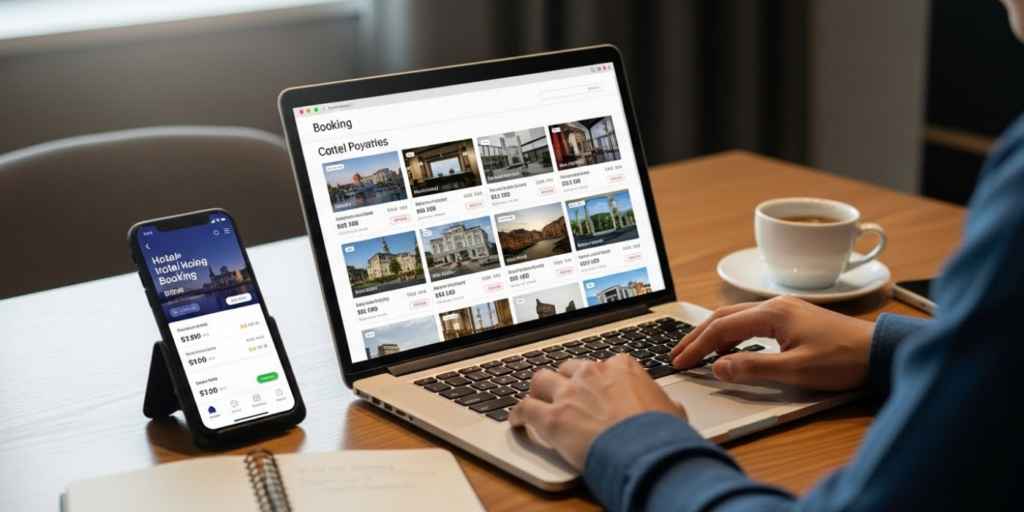
It’s tempting to book on the first site you see, but prices vary wildly between OTAs (Online Travel Agencies) like Expedia, Booking.com, and hotel-branded sites.
Why?
- OTAs negotiate bulk rates but add fees.
- Hotels often offer “Best Rate Guarantee”—if you find a lower price elsewhere, they’ll match it and add perks (like free breakfast or late checkout).
Smart strategy:
- Search on Google Hotels—it aggregates prices from dozens of sites in one view.
- Note the lowest price and check the hotel’s official website.
- If the hotel matches or beats it, book direct. You’ll get better customer service if issues arise (no middleman), and you’ll earn loyalty points.
Bonus: Some credit cards (like Chase Sapphire or Amex Platinum) offer statement credits or discounts when you book through their travel portals—compare those too!
Caution: Avoid obscure booking sites with too-good-to-be-true deals. Stick to well-known platforms with clear cancellation policies.
3. Use Price Alerts and Track Drops Like a Pro
Hotel prices change—sometimes multiple times a day. Instead of refreshing endlessly, let technology do the work.
Top tools for price tracking:
- Google Hotels: Click “Track Prices” to get email alerts when rates drop.
- Kayak Price Alerts: Set alerts for specific dates and destinations.
- Hopper (for hotels): Predicts whether prices will rise or fall and recommends when to book.
How it works:
Say you’re eyeing a $220/night hotel in Chicago for Labor Day weekend. You set a price alert at $180. Three weeks later, inventory is low—but a conference cancels, and rooms flood the market. You get an alert: $165/night. Book instantly.
Pro move: Clear your browser cookies or use incognito mode when searching. While the “cookie tracking” myth is mostly debunked, it doesn’t hurt to browse privately—just in case.
4. Leverage Loyalty Programs (Even If You’re Not a Frequent Traveler)
You don’t need to be a road warrior to benefit from hotel loyalty programs. In fact, most are free to join and offer instant perks.
Top programs worth joining:
- Marriott Bonvoy: Free Wi-Fi, mobile check-in, and potential room upgrades
- IHG One Rewards: Points never expire, and you can pool points with family
- World of Hyatt: Generous points earning and easy redemption for free nights
Even better: Many programs offer member-only rates that are 5–15% lower than public prices. And if you have a co-branded credit card (like Hilton Honors Amex), you’ll earn bonus points and get automatic elite status.
Real-life win:
Lisa booked a Hyatt in Denver through the app as a loyalty member. She got a $20 discount, free bottled water, and a room upgrade—all for signing up 2 minutes prior.
Tip: Stack benefits—use a travel credit card that earns points and gives you elite status. Suddenly, you’re getting late checkout and free breakfast without ever staying 20 nights.
5. Negotiate—Yes, Really

Many travelers don’t realize: hotel rates are often negotiable, especially if you’re booking directly or walking in.
When to try:
- You’re booking last-minute
- The hotel has low occupancy (check sites like HotelTonight to gauge demand)
- You’re staying multiple nights
How to ask (politely!):
Call the front desk and say:
“Hi, I’m planning to stay from [dates] and saw your rate is $X. I’m a [loyalty member / repeat guest / celebrating a special occasion]. Is there any flexibility on the price or possible upgrades?”
Alternative: At check-in, if the lobby is empty, ask:
“Is there any chance of a complimentary upgrade or discount for a longer stay?”
Success story:
David called a boutique hotel in Savannah two days before arrival. The website showed $219/night. He mentioned he was celebrating his anniversary—and got $179/night plus a bottle of wine.
Remember: Be kind, not demanding. A smile (even over the phone) goes a long way.
6. Consider Alternative Accommodations (Without Sacrificing Safety)
Sometimes the best “hotel” isn’t a hotel at all.
Worth exploring:
- Boutique guesthouses: Often cheaper than chains, with more character
- Apartment rentals (via Blueground or Sonder): Include kitchens, saving on food costs
- University dorms (in Europe): Open to travelers in summer, ultra-affordable
- Monastery stays: Available in Italy, Spain, and Greece—peaceful and $50–$80/night
But be smart:
- Read recent reviews focusing on cleanliness and safety
- Verify the host is verified (on Airbnb, look for “Superhost” or “ID confirmed”)
- Avoid places with no clear address or contact info
Pro tip: Filter for “Entire Place” if you want privacy, or “Private Room” for a balance of local interaction and personal space.
7. Always Check Cancellation Policies and Hidden Fees
A $99/night deal isn’t a deal if it’s non-refundable or loaded with fees.
Watch for:
- Resort fees: Common in Las Vegas and Orlando—can add $30–$50/night
- City taxes: Not always included in the initial quote
- Parking or Wi-Fi charges: Often listed in fine print
Always read the “Total Price” before booking. On Google Hotels, toggle “Show prices with taxes and fees” to compare apples to apples.
And never skip the cancellation policy:
- Free cancellation = peace of mind if plans change
- Non-refundable = only book if you’re 100% sure
Golden rule: If a deal seems too good to be true, check the fine print. That $69 “luxury” hotel might be a 45-minute bus ride from downtown—with no breakfast, no elevator, and a 3 a.m. checkout.
Conclusion: Your Best Rate Is Within Reach
Booking a hotel doesn’t have to feel like gambling. With the right timing, tools, and tactics, you can consistently find great prices without endless scrolling or buyer’s remorse.
We’ve covered how to time your booking, compare platforms wisely, track price drops, use loyalty perks, negotiate respectfully, explore alternatives, and avoid hidden costs. Each strategy puts you in control—so you spend less on lodging and more on experiences that matter.
Remember: the goal isn’t just the cheapest room—it’s the best value for your needs, safety, and comfort.
So next time you plan a trip, try just one of these tips. Maybe set a price alert or book direct with a loyalty account. Small shifts lead to big savings over time.
We’d love to hear from you: What’s your best hotel-booking hack? Have you ever negotiated a better rate or snagged a surprise upgrade? Share your story in the comments below! And if this guide saved you future dollars, pass it on to a friend who’s planning a getaway. Happy travels—and even happier savings!

James Anderson is a passionate enthusiast of travel, fine dining, financial freedom, and personal performance. Always seeking new experiences and challenges, he believes in living life fully while continuously improving himself. For James, exploring new destinations, savoring unique culinary experiences, and striving for independence are not just hobbies—they are a lifestyle built on curiosity, growth, and the pursuit of excellence.