
Introduction
History isn’t just found in textbooks—it lives in ancient stones, echoes through cobblestone alleys, and breathes in the quiet halls of centuries-old temples. For history enthusiasts, traveling isn’t about ticking off landmarks; it’s about stepping into the stories that shaped civilizations. Whether you’re fascinated by Roman emperors, Mesoamerican astronomers, or the revolutions that redefined nations, the world is filled with destinations where the past feels vividly present.
In this guide, we’ll explore some of the most compelling cultural destinations for history lovers—places that offer more than just museums and monuments. These are living archives, where every street, artifact, and local legend connects you to humanity’s grand narrative. From the temples of Kyoto to the ruins of Machu Picchu, we’ll highlight why these spots matter, what makes them unique, and how you can experience them with depth and respect.
So pack your curiosity (and maybe a sturdy pair of walking shoes)—it’s time to journey through time.
1. Rome, Italy – Where Antiquity Meets Everyday Life
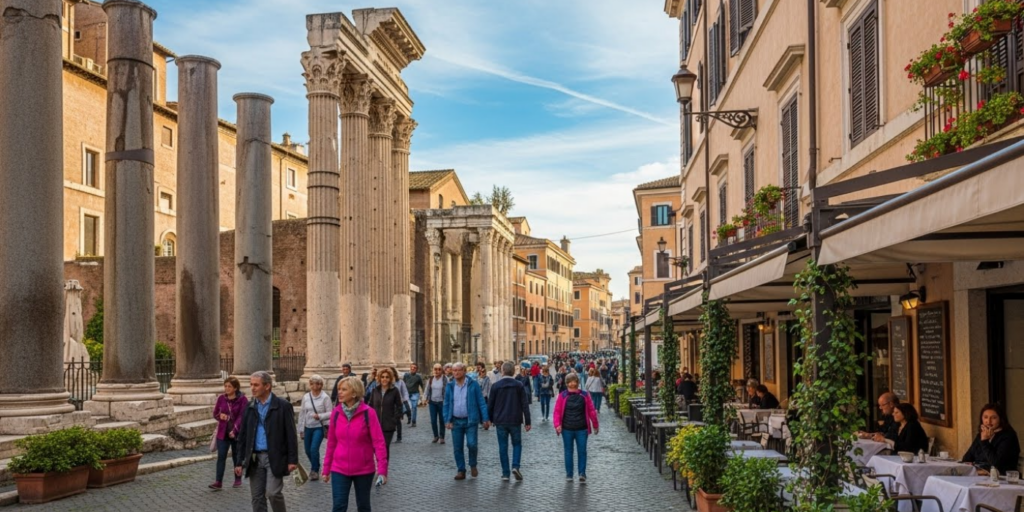
Rome isn’t just a city with history—it is history. Walk down Via dei Fori Imperiali, and you’re striding past the remnants of empires. Grab your morning espresso next to a 2,000-year-old column. In Rome, the ancient and the modern coexist in a way few places manage.
The Colosseum, of course, is iconic—but go beyond the facade. Book a guided underground tour to see where gladiators once waited in darkness, or explore the Roman Forum, once the political and social heart of the ancient world. Nearby, the Pantheon—still standing strong after nearly two millennia—boasts the world’s largest unreinforced concrete dome. Locals and tourists alike duck inside to marvel at its oculus, open to the sky.
Don’t miss the Capitoline Museums, founded in 1471 and considered the world’s oldest public museums. Here, you’ll find the original bronze she-wolf of Romulus and Remus and breathtaking Renaissance art nestled among Roman artifacts.
Pro tip: Visit early in the morning or late afternoon to avoid crowds. And while you’re there, remember that many sites are built on layers of history—churches over temples, palaces over baths. Rome rewards those who look closely.
2. Kyoto, Japan – The Soul of Traditional Japan
While Tokyo races toward the future, Kyoto cradles Japan’s past with reverence. Once the imperial capital for over 1,000 years, Kyoto is home to 17 UNESCO World Heritage Sites, over 2,000 temples and shrines, and centuries-old traditions still practiced daily.
Start with Kinkaku-ji (the Golden Pavilion), a Zen Buddhist temple covered in brilliant gold leaf that shimmers above a mirror-like pond. Then wander through Fushimi Inari Shrine, famous for its seemingly endless path of vermilion torii gates winding up Mount Inari—a hike that feels like walking through a spiritual corridor.
But Kyoto’s magic isn’t just in its monuments. It’s in the tea ceremonies held in 300-year-old teahouses in Gion, the geisha district. It’s in the rustle of silk kimonos at dawn, or the quiet raking of gravel in Zen rock gardens like Ryoan-ji.
Practical advice: Rent a bicycle to explore the city like a local. Many temples open early and close by 5 p.m., so plan accordingly. And if you stay in a ryokan (traditional inn), you’ll experience tatami mats, futon bedding, and kaiseki meals—history you can taste and touch.
Kyoto teaches a vital lesson for history lovers: the past isn’t static. It’s a living practice, passed down with care.
3. Cusco and Machu Picchu, Peru – Echoes of the Inca Empire
High in the Andes, Cusco was once the capital of the mighty Inca Empire—and it still pulses with that legacy. Cobbled streets follow ancient Inca pathways, and massive stone walls—fitted without mortar—stand as testaments to engineering genius that predates European arrival by centuries.
Begin in Cusco’s historic center, a UNESCO site where Spanish colonial buildings sit atop Inca foundations. Visit Qorikancha (Temple of the Sun), once covered in gold and dedicated to Inti, the sun god. Then, acclimate to the altitude before heading to the crown jewel: Machu Picchu.
Reaching Machu Picchu is an adventure in itself. You can take the scenic train through the Sacred Valley, or challenge yourself with the Inca Trail—a four-day trek passing cloud forests, ancient ruins, and sunrise views over the Lost City. Once there, hire a knowledgeable guide. The site’s alignment with solstices, agricultural terraces, and hidden temples reveal layers of astronomical and spiritual knowledge.
Important note: The Peruvian government now limits daily visitors and requires guided entry to preserve the site. Book permits months in advance, especially for the Inca Trail. Sustainable tourism isn’t just responsible—it ensures these wonders endure for future generations.
4. Cairo and Luxor, Egypt – Cradles of Civilization
Few places ignite the imagination like Egypt. Here, history isn’t just old—it’s foundational. The Pyramids of Giza, standing for over 4,500 years, are the last surviving wonder of the ancient world. Yet, many travelers stop there and miss the deeper treasures.
Head south to Luxor, often called the world’s greatest open-air museum. On the West Bank, the Valley of the Kings holds the tombs of pharaohs like Tutankhamun, their walls painted with vivid scenes of the afterlife. Nearby, Hatshepsut’s Temple rises dramatically against limestone cliffs—a masterpiece of ancient female power.
On the East Bank, Karnak Temple awes with its forest of towering columns, some inscribed with the names of gods and kings from 2000 BCE. At sunrise, the light filters through the Hypostyle Hall in a way that feels almost divine.
Travel tip: Visit in cooler months (October–April). Hire a certified Egyptologist guide—they bring hieroglyphs to life with stories of politics, religion, and daily life. And don’t skip the Egyptian Museum in Cairo, though many artifacts are gradually moving to the new Grand Egyptian Museum near the pyramids—set to be the largest archaeological museum in the world.
Egypt reminds us that history isn’t just about dates and dynasties—it’s about humanity’s enduring quest for meaning, immortality, and cosmic order.
5. Athens, Greece – Birthplace of Democracy and Philosophy
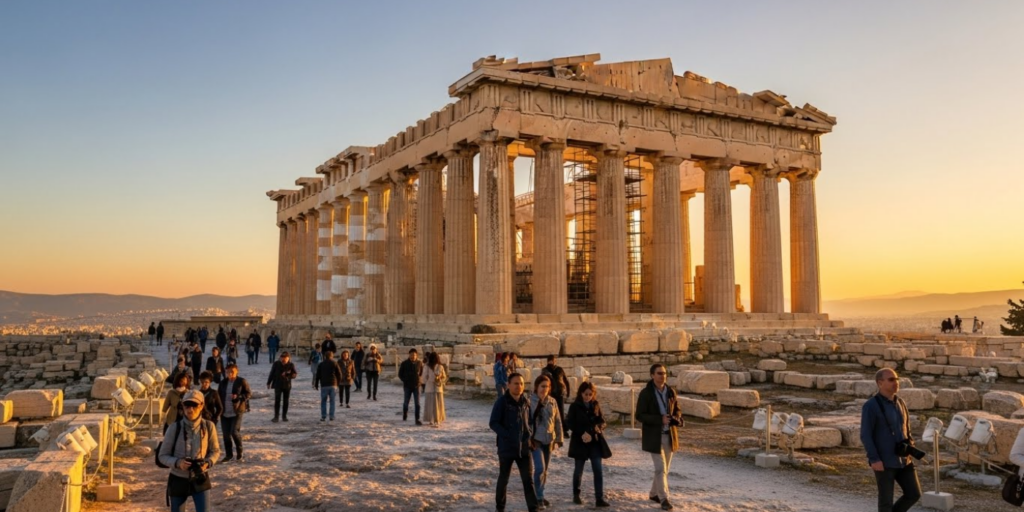
If Rome gave us law and engineering, Athens gifted the world with democracy, philosophy, and theater. Walking through Athens is like tracing the footsteps of Socrates, Plato, and Pericles.
The Acropolis dominates the skyline—and for good reason. The Parthenon, dedicated to Athena, is a marvel of optical illusion and mathematical precision. But don’t rush through. Spend time in the Acropolis Museum, where glass floors reveal ancient ruins beneath your feet, and sculptures are displayed in natural light to mimic their original settings.
Wander through the Plaka neighborhood, with its winding lanes and Byzantine chapels, then descend to the Ancient Agora—the heart of Athenian public life. It was here that citizens debated justice, war, and ethics. Nearby, the Temple of Hephaestus remains one of the best-preserved classical Greek temples in existence.
Insider suggestion: Visit the National Archaeological Museum, home to the Antikythera mechanism (an ancient “computer”) and golden Mycenaean masks. And if you’re there in summer, catch a performance at the Odeon of Herodes Atticus, a 2,000-year-old theater still hosting concerts under the stars.
Athens proves that ideas can be as enduring as stone—and sometimes, even more powerful.
Honorable Mentions: Hidden Gems Worth Exploring
While the above destinations top most lists, history lovers should also consider less-trodden paths:
- Petra, Jordan: The “Rose City” carved into pink sandstone cliffs, once a thriving Nabataean trade hub.
- Angkor Wat, Cambodia: A vast temple complex symbolizing Mount Meru, blending Hindu and Buddhist cosmology.
- Istanbul, Turkey: Where Byzantine, Ottoman, and Roman histories converge in sites like Hagia Sophia and the Basilica Cistern.
- Mexico City, Mexico: Built atop the Aztec capital of Tenochtitlán—visit the Templo Mayor to stand where empires collided.
These places offer rich narratives without the overwhelming crowds—perfect for deeper, more reflective exploration.
Conclusion
History isn’t confined to the past—it’s a living dialogue between generations. The destinations we’ve explored—from the marble halls of Athens to the misty peaks of Machu Picchu—invite us not just to observe, but to connect, reflect, and understand. Each site tells a story about human ambition, belief, resilience, and creativity.
Traveling as a history enthusiast means going beyond the guidebook. It means listening to local guides, respecting sacred spaces, and asking questions that lead to deeper understanding. It also means traveling responsibly—preserving these sites so others can feel the same awe we do.
So whether you’re planning your next trip or simply dreaming from your armchair, remember: every stone has a story. And the world is waiting to share them with you.
Now we’d love to hear from you: Which historical site has moved you the most? Is there a lesser-known destination you think more people should know about? Share your favorite cultural journey in the comments below—because history belongs to all of us.

James Anderson is a passionate enthusiast of travel, fine dining, financial freedom, and personal performance. Always seeking new experiences and challenges, he believes in living life fully while continuously improving himself. For James, exploring new destinations, savoring unique culinary experiences, and striving for independence are not just hobbies—they are a lifestyle built on curiosity, growth, and the pursuit of excellence.