
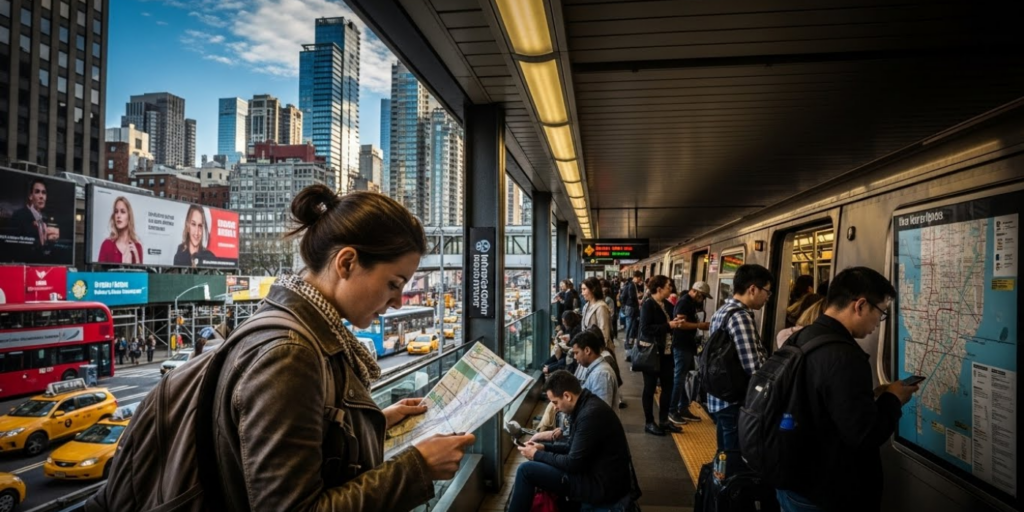
You step off the plane, train, or bus in a new city—maybe Tokyo, Berlin, Mexico City, or even Chicago—and face a choice: shell out for expensive rideshares, wrestle with parking, or dive into the local public transit system. If you’ve ever felt overwhelmed by subway maps that look like abstract art, ticket machines in a foreign language, or the fear of accidentally boarding a train to the wrong borough, you’re not alone. But here’s the truth: mastering public transit is one of the fastest ways to feel like a local—and save serious money while you’re at it.
Whether you’re a frequent traveler, a new resident, or just visiting for the weekend, knowing how to confidently use buses, trains, trams, and subways opens up a city in ways car travel never can. You’ll move faster during rush hour, stumble upon hidden neighborhoods, and reduce your carbon footprint—all while spending a fraction of what you’d pay for taxis.
In this guide, you’ll learn a step-by-step system for navigating any public transit network in the world, even if you don’t speak the language or have zero prior knowledge. We’ll cover how to research before you go, decode maps and signage, buy the right ticket, avoid common pitfalls, and use real-time apps like a pro. Plus, you’ll pick up cultural etiquette tips that help you blend in—and stay safe—no matter where you are.
So take a deep breath. That confusing transit hub? You’re about to own it.
Why Public Transit Is Your Best Travel Ally
Let’s start with the obvious: it’s affordable. A single subway ride in New York costs $2.90—less than a latte. In Paris, a day pass is €8.45, giving you unlimited access to trains, buses, and even bikes. Compare that to $40+ for a single Uber across town.
But the benefits go beyond savings:
- Speed: In dense cities, subways and buses often bypass traffic entirely.
- Convenience: No parking stress, no rental insurance, no fuel costs.
- Sustainability: One full bus replaces 30–40 cars—good for the planet and the city.
- Cultural immersion: You’ll see how locals live, commute, and interact.
According to the American Public Transportation Association, travelers who use public transit spend 30% more time exploring and less time stressed about logistics.
And yes—even in car-centric cities like Los Angeles or Atlanta, transit is improving. With the right prep, you can use it effectively for key routes, airports, or downtown cores.
The key? Don’t treat transit as a backup plan. Make it your first choice—and prepare accordingly.
Before You Go: Research Like a Local

You don’t need to memorize the entire metro map—but 15 minutes of prep saves hours of confusion.
Step 1: Identify the Main Systems
Search “[City Name] public transit map.” Most major cities have one primary agency:
- London: Transport for London (TfL)
- Tokyo: Tokyo Metro + JR Lines
- São Paulo: Metro + SPTrans buses
Step 2: Download the Right Apps
These work offline and in real time:
- Google Maps: Shows routes, schedules, and step-by-step walking directions to stations.
- Citymapper: Superior in major global cities (London, NYC, Paris, Berlin)—includes live delays and platform numbers.
- Moovit: Great for bus-heavy cities and real-time arrival alerts.
Step 3: Understand Payment Options
Many cities have moved to contactless systems:
- Tap your credit card (Visa/Mastercard with NFC) directly on the reader (London, Chicago, Sydney).
- Buy a reloadable transit card (like Oyster in London, Suica in Tokyo, or TAP in LA).
- Avoid single paper tickets—they’re often more expensive and slower to use.
Pro Tip: Check if your destination offers a tourist pass (e.g., Paris Visite, Berlin WelcomeCard). These include unlimited rides + museum discounts—but only worth it if you’ll use transit heavily.
At the Station: Decoding Signs, Maps, and Platforms
Once you’re on the ground, look for these universal cues—even if you don’t speak the language.
Transit maps use color-coded lines and symbols:
- Circles or diamonds = stations
- Intersections = transfer points
- Arrows = direction of travel (often labeled “Northbound/Southbound” or terminal station names like “Downtown” or “Airport”)
Platform signs typically show:
- Next train’s destination (e.g., “To Brooklyn” not “To Train”)
- Arrival time (digital displays are common in modern systems)
- Car numbers (some systems designate quiet cars or bike-friendly zones)
If you’re lost:
- Follow the crowd (especially during rush hour—locals know the way).
- Look for information desks or uniformed staff—most major systems have English-speaking help.
- Use your offline map to orient yourself: Find your station, then match the map’s layout to real-life exits and platforms.
Golden Rule: Always check the final destination on the train/bus screen—not just the line color. Two trains on the same line might split to different suburbs!
Etiquette and Safety: Blend In and Stay Confident
Public transit is safe in most cities—but awareness and respect go a long way.
Universal Etiquette Rules:
- Stand right, walk left on escalators (standard in Europe, Asia, and many U.S. cities).
- Offer seats to elderly, pregnant, or disabled riders.
- Keep bags on your lap in crowded spaces to avoid blocking aisles.
- Don’t eat strong-smelling food (especially on trains).
Cultural Nuances:
- In Japan, talking on the phone or eating on trains is frowned upon.
- In Spain or Italy, buses may not stop unless you signal—but in Germany, they’ll stop at every station by default.
- In many Asian cities, women-only cars operate during rush hour—respect the signage.
Safety Tips:
- Keep your phone and wallet in a front pocket or zipped bag.
- Avoid empty train cars late at night—stay where others are.
- If you miss your stop, don’t panic. Most systems are loops or grids—just ride to the next station and reverse direction.
Remember: Most transit workers and locals are happy to help—especially if you smile and ask politely. A simple “Excuse me, is this the train to Central Station?” goes a long way.
Troubleshooting Common Challenges

Even seasoned travelers hit snags. Here’s how to handle them:
Problem: You’re on the wrong train.
→ Stay calm. Check the next stop on the digital display. Most urban systems have frequent service—you’ll be back on track in 10–15 minutes.
Problem: Your card isn’t working.
→ Look for a “Help” or “Assistance” button at the gate. Many systems have intercoms connected to staff.
Problem: There’s a delay or strike.
→ Apps like Citymapper will alert you. Have a backup plan: know one alternative route (e.g., bus instead of subway).
Problem: You don’t speak the language.
→ Save key phrases in your phone: “Where is the metro?” “How much is a ticket?” “Does this bus go to [landmark]?”
→ Use Google Translate’s camera mode to read signs in real time.
Problem: You’re carrying luggage.
→ Avoid rush hour. Use elevators (not escalators) if available. In cities like Prague or Budapest, some stations lack elevators—check accessibility maps in advance.
Final Thoughts: Freedom on the Move
Navigating public transit isn’t just a logistical skill—it’s a gateway to independence, discovery, and connection. Every time you board a local bus or subway, you’re participating in the daily rhythm of a city. You’re not a spectator. You’re part of the flow.
And with the tools in this guide—smart prep, real-time apps, cultural awareness, and a calm mindset—you’re ready to move through any urban landscape with confidence.
So next time you land somewhere new, skip the taxi line. Walk to the nearest station, tap your card, and let the city carry you forward. The best views aren’t from the back of an Uber—they’re from the window seat of a local train, watching life unfold, block by block.
What’s your best (or funniest) public transit story? Did you ever get lost—and find something amazing instead? Share your experience in the comments below! Your tip might help another traveler turn confusion into adventure.

James Anderson is a passionate enthusiast of travel, fine dining, financial freedom, and personal performance. Always seeking new experiences and challenges, he believes in living life fully while continuously improving himself. For James, exploring new destinations, savoring unique culinary experiences, and striving for independence are not just hobbies—they are a lifestyle built on curiosity, growth, and the pursuit of excellence.