
Introduction
You’ve found the perfect destination, scored great flights, and narrowed your hotel choices—but now you’re staring at a dizzying list of room types: “Deluxe King,” “Executive Suite,” “Garden View,” “City View,” “Premium Access,” “Accessible,” “Connecting,” and more. Which one actually matches what you need? Choosing the wrong room can mean paying extra for features you won’t use—or worse, ending up with a noisy, cramped space that ruins your trip.
The truth is, not all rooms are created equal, even within the same hotel. The key to a comfortable, value-packed stay lies in understanding what each room type really offers—and how it aligns with your travel style, budget, and priorities.
In this guide, we’ll walk you through everything you need to know to pick the right room—not just the fanciest or cheapest. From decoding hotel jargon and evaluating views to matching room features to your travel goals (romance, family fun, work, relaxation), you’ll learn practical strategies to make smarter bookings every time. Whether you’re planning a solo city break, a family beach vacation, or a business trip with downtime, the perfect room is within reach. Let’s help you find it.
1. Know Your Travel Purpose: Match the Room to Your “Why”
Before you even look at room names, ask: What’s the main goal of this trip?
- Romantic getaway? Prioritize quiet, ambiance, and extras like a soaking tub or balcony.
- Family vacation? You’ll need space, extra beds, and maybe a kitchenette.
- Business trip? Reliable Wi-Fi, a desk, and proximity to elevators or conference rooms matter most.
- Solo adventure? Security, location, and social spaces (like a lobby bar or rooftop) might be key.
Why this matters: A “Deluxe Suite” might sound luxurious, but if you’re only in the room to sleep, you’re wasting money. Conversely, booking the cheapest “Standard Double” for a week-long family stay could mean constant discomfort.
Real example: Sarah booked a “City View King” for her anniversary in Chicago—only to discover it faced a parking garage. Had she prioritized “ambiance over view,” she might have chosen a courtyard room with blackout curtains and a better bed—trading scenery for serenity.
Pro tip: Write down your top 3 needs before booking (e.g., “quiet,” “two beds,” “bathtub”). Let those guide your decision—not the glossy photos.
2. Decode Hotel Room Jargon (What “Deluxe” Really Means)
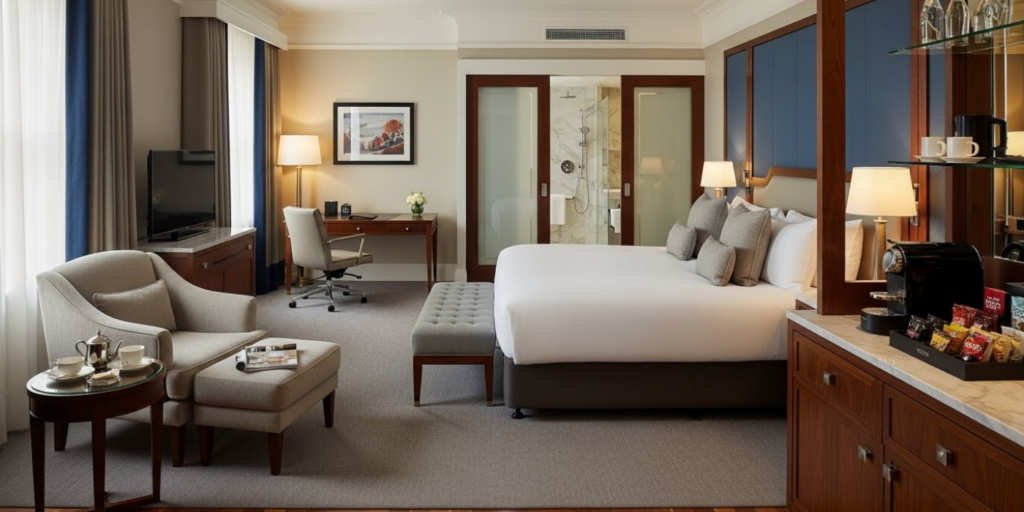
Hotels use descriptive names to upsell—but these labels aren’t standardized. “Premium” at one property might be “Standard” at another.
Here’s what common terms usually mean:
- Standard/Classic: The base-level room. Smallest size, basic amenities.
- Superior/Deluxe: Slightly larger or better located (higher floor, corner room). May include upgraded toiletries or a better view—but not always.
- Executive/Club: Often includes access to a lounge with free breakfast, snacks, and evening drinks. Great for business travelers or those who value quiet workspace.
- Suite: Separate living area and bedroom. Ideal for longer stays or families.
- Accessible: Designed for guests with mobility needs (wider doors, roll-in showers).
- Connecting: Two rooms with an internal door—perfect for families or groups.
- View categories: “City View” could mean a brick wall; “Ocean View” might be a sliver between buildings. Always check recent guest photos.
Red flag: If the description is vague (“modern room with comfortable amenities”), dig deeper. Read recent reviews or call the front desk to ask: “What’s the actual difference between Standard and Deluxe?”
Bonus: Use Google Maps’ “Street View” to check what’s outside the window—construction sites, nightclubs, or busy highways can ruin even the priciest room.
3. Consider Location Within the Hotel—Not Just the City
Your room’s position inside the building can impact your entire stay.
Key factors:
- Floor level: Higher floors are quieter and offer better views—but consider elevator wait times (especially in older hotels).
- Proximity to elevators/stairs: Convenient for luggage, but can mean noise.
- Distance from amenities: Close to the pool or lobby? Great for social travelers. But if you value sleep, you might prefer the quiet end of the hall.
- Sun exposure: East-facing rooms get morning light; west-facing can get hot in the afternoon.
Pro move: When booking, add a note like “quiet room away from elevator, high floor if possible.” Many hotels honor these requests—especially if you’re a loyalty member.
Real impact: Mark once booked a “Pool View” room in Miami, only to be kept awake by 2 a.m. DJ sets. A “Garden View” room on the opposite side would’ve been peaceful—and cost the same.
4. Evaluate Bed Configuration and Room Layout
This is especially crucial for families, couples, or groups.
- King vs. Two Queens: Couples usually prefer a king. Families or friends sharing often need two beds.
- Sofa beds or rollaways: Check maximum occupancy. A “room for 4” might mean two adults + two kids on a pull-out couch—not four full-sized adults.
- Bathroom setup: Shared vs. en-suite? Is there a bathtub or just a shower? Important for families with small children or travelers with mobility needs.
- Kitchenette: If you’re staying 5+ nights or traveling with dietary restrictions, a microwave or mini-fridge can save money and stress.
Don’t assume: A photo might show a spacious layout, but the actual room could feel cramped. Look for square footage in the description—or compare guest photos showing the full room.
Tip for families: “Family rooms” or “quad rooms” are designed for groups. Booking two standard rooms might cost more and force you to split up.
5. Use Reviews and Photos Strategically
Hotel websites show their best rooms. Real guests show the reality.
How to read reviews like a pro:
- Sort by “most recent” to see current conditions.
- Search keywords: “noise,” “view,” “small,” “smell,” “elevator.”
- Look for photos labeled “actual room” or “what I got”—not the professional shots.
- Pay attention to consistent complaints (e.g., “all rooms near the street are loud”).
Apps that help:
- Google Maps: Often has more candid photos than booking sites.
- TripAdvisor: Use the “Room Tip” feature to see which room numbers reviewers recommend.
- Hotel loyalty apps: Members sometimes get floor maps or room selection tools.
Example: A traveler noticed 12 recent reviews mentioning “thin walls” in rooms near the ice machine. She requested a room at the far end—and slept soundly.
6. When to Pay More (and When to Save)
Not every upgrade is worth it. Ask: Will this feature genuinely improve my stay?
Worth the splurge:
- Club/Executive Lounge access (if you’ll use breakfast and evening snacks)
- Guaranteed high floor or specific view (for once-in-a-lifetime trips)
- Quiet location (for light sleepers or remote workers)
Skip the upgrade if:
- You’re only in the room to sleep and shower
- The “view” is marginal (e.g., partial ocean from 15 floors down)
- You’re staying just one night
Smart compromise: Book a refundable rate in a mid-tier room, then check for upgrades at check-in. If the hotel isn’t full, they may offer a better room for free or at a discount.
7. Special Considerations: Accessibility, Pets, and Work Needs
Don’t forget practical needs that can make or break your trip:
- Accessibility: If you or a guest has mobility challenges, book an ADA-compliant room—don’t assume “accessible” just means a ramp at the entrance.
- Pet-friendly: Confirm fees, size limits, and whether pets can be left alone. Some hotels charge $100+ per stay!
- Work setup: Need a desk, HDMI port, or strong Wi-Fi? Call ahead—many hotels now cater to remote workers with “workation” packages.
- Loyalty perks: Members often get free upgrades, late checkout, or room guarantees. Sign up—it’s usually free.
Pro tip: If you’re working remotely, ask for a room away from housekeeping carts and ice machines—those can be noisy during daytime hours.
Conclusion
Picking the right room type isn’t about chasing luxury—it’s about intentional travel. By aligning your room choice with your trip’s purpose, decoding marketing language, and using real guest insights, you can maximize comfort, minimize stress, and often save money.
Remember: the best room isn’t the biggest or most expensive—it’s the one that lets you rest, recharge, and enjoy your destination exactly as you envisioned. Whether that means a quiet courtyard view for your solo retreat or a connecting suite for your family reunion, the power is in your hands.
So next time you book, slow down. Read the fine print. Ask questions. And trust that a little extra research now will pay off in comfort later.
We’d love to hear from you: What’s your biggest room-booking lesson—good or bad? Have you ever been surprised (pleasantly or not) by your room choice? Share your experience in the comments below! And if this guide helped you avoid a booking blunder, pass it along to a friend planning their next getaway. Happy travels—and even happier stays! 🛏️✈️

James Anderson is a passionate enthusiast of travel, fine dining, financial freedom, and personal performance. Always seeking new experiences and challenges, he believes in living life fully while continuously improving himself. For James, exploring new destinations, savoring unique culinary experiences, and striving for independence are not just hobbies—they are a lifestyle built on curiosity, growth, and the pursuit of excellence.