
Introduction
Picture this: you’re sipping fresh coconut water on a sun-drenched beach in Colombia, hiking through misty Andean villages in Peru, or dancing to live samba in a Rio de Janeiro favela—all without maxing out your credit card. Sounds like a dream? It doesn’t have to be. South America is one of the most affordable, diverse, and rewarding travel destinations in the world, offering everything from world-class cuisine and ancient ruins to lush rainforests and vibrant urban culture.
Yet many travelers assume international trips—especially to another continent—are out of reach on a modest budget. The truth? With smart planning, local insights, and a flexible mindset, you can experience the magic of South America for as little as $35–$60 per day in many countries.
In this guide, we’ll walk you through practical, tried-and-tested strategies to plan a memorable—and budget-friendly—trip to South America. From choosing the right destinations and timing your visit to saving on flights, accommodations, food, and activities, you’ll learn how to stretch your dollars without sacrificing safety, comfort, or adventure. Whether you’re a solo backpacker, a couple on a romantic getaway, or a digital nomad seeking inspiration, South America is waiting—and it’s more accessible than you think.
Step 1: Choose Your Destinations Wisely
Not all South American countries cost the same. While Chile and Argentina (especially post-2023 inflation shifts) can be pricier, others offer incredible value without compromising on experience.
Top budget-friendly countries:
- Bolivia: One of the cheapest countries on the continent. A hearty meal costs $3–$5, and hostels start at $8/night.
- Peru: Home to Machu Picchu, but incredibly affordable outside tourist hotspots. Cusco and Arequipa offer great hostels, local eats, and day hikes for under $20/day.
- Colombia: From the coffee region to Cartagena’s beaches, Colombia blends affordability with safety and beauty. Expect $25–$40/day outside major cities.
- Ecuador: Explore the Andes, Amazon, and even the Galápagos (on a budget—more on that later!) for far less than you’d spend in Europe.
- Paraguay & Uruguay (interior): Underrated and ultra-low-cost, especially for overland travel from Brazil or Argentina.
Pro tip: Focus on 2–3 countries max for a 2–4 week trip. Overland buses are cheap and scenic—flights between hubs (like Lima to Bogotá) can be found for under $150 if booked in advance.
Avoid “tourist tax” traps: Prices in places like central Machu Picchu or Cartagena’s walled city can be 2–3x higher than just a few blocks away. Stay in local neighborhoods for authentic (and cheaper) experiences.
Step 2: Time Your Trip for Value and Weather

When you go can dramatically affect both cost and comfort.
High season (June–August, December): Higher prices, crowded sites, and limited lodging availability—especially in Peru and Argentina.
Shoulder season (April–May, September–October): Best balance of good weather, fewer crowds, and lower prices.
Low season (November–March in most Andean countries): Rainy in the Amazon and mountains, but excellent for lower costs and lush landscapes. (Note: Brazil’s summer is December–March—great for beaches but humid.)
Bonus: Many festivals (like Carnival in Brazil or Inti Raymi in Cusco) happen during high season—but if you plan ahead, you can enjoy the energy without the peak pricing.
Real savings example: A one-way bus from La Paz to Uyuni (Bolivia) costs $25 in low season vs. $35+ in July. Hostels drop rates by 20–30% outside holidays.
Action step: Use Google Flights’ “Date Grid” and Skyscanner’s “Whole Month” view to compare flight costs across dates. Even shifting your trip by a week can save hundreds.
Step 3: Save Big on Flights and Transportation
International flights are often the biggest expense—but not if you’re strategic.
Flight hacks:
- Fly into a budget hub: Fly into Panama City (COPA Airlines) or Bogotá (Avianca) for cheaper connections across the continent.
- Use LATAM Pass or Avianca LifeMiles: Transfer credit card points for discounted regional flights.
- Book 2–4 months in advance: Last-minute flights within South America can be shockingly expensive.
- Consider open-jaw tickets: Fly into one city (e.g., Lima) and out of another (e.g., Santiago) to avoid backtracking.
Ground transportation:
- Overland buses are safe, comfortable, and incredibly cheap. A 12-hour luxury bus from Medellín to Cartagena? Around $30.
- Rideshare apps like BlaBlaCar are popular in Colombia, Chile, and Argentina for intercity travel.
- Local buses and colectivos (shared vans) cost pennies compared to taxis. Learn basic route words like “terminal” or “centro.”
Pro tip: Download Busbud or Recorrido apps to compare bus companies, schedules, and prices across countries.
Step 4: Cut Accommodation Costs Without Sacrificing Safety
You don’t need a hotel to sleep well. In fact, some of the best travel memories come from hostels, homestays, and guesthouses.
Budget lodging options:
- Hostels: From $8–$15/night in Bolivia, Peru, and Colombia. Look for ones with kitchens, free walking tours, and social events.
- Guesthouses (hostales): Family-run, clean, and often include breakfast for $12–$20/night.
- Airbnb (private rooms): Great for longer stays or couples—often cheaper than hotels.
- Workaways or HelpX: Trade a few hours of help (gardening, reception) for free lodging. Perfect for slow travelers.
Safety first:
- Choose hostels with lockers, 24/7 reception, and good reviews (aim for 8.5+ on Hostelworld).
- Avoid staying in sketchy neighborhoods—ask your hostel staff for advice.
Bonus: In many places, bargaining in person gets you a better rate than online booking—especially in shoulder season.
Step 5: Eat Like a Local (and Save 70% on Food)
Food is one of South America’s greatest joys—and it’s incredibly affordable if you skip tourist traps.
Eat where locals eat:
- Menú del día (Peru/Ecuador): A full lunch—soup, main, drink—for $2–$4.
- Comida corrida (Colombia): Similar fixed-price lunches.
- Mercados (markets): Fresh fruit, empanadas, and juices for $1–$2.
- Street food: Arepas in Colombia, salteñas in Bolivia, anticuchos in Peru—all under $2 and delicious.
Avoid:
- Restaurants with English-only menus or “tourist menus” outside major plazas.
- Bottled water in cities with safe tap water (like Bogotá or Santiago)—use a filter bottle instead.
Cook your own meals: Hostels with kitchens let you make simple dishes with local produce. A week’s worth of groceries often costs less than two restaurant dinners.
Pro tip: Learn basic food phrases: “¿Cuánto cuesta?” (How much?), “Sin picante, por favor” (No spicy, please). Locals appreciate the effort—and may give you extra portions!
Step 6: Enjoy Free and Low-Cost Activities
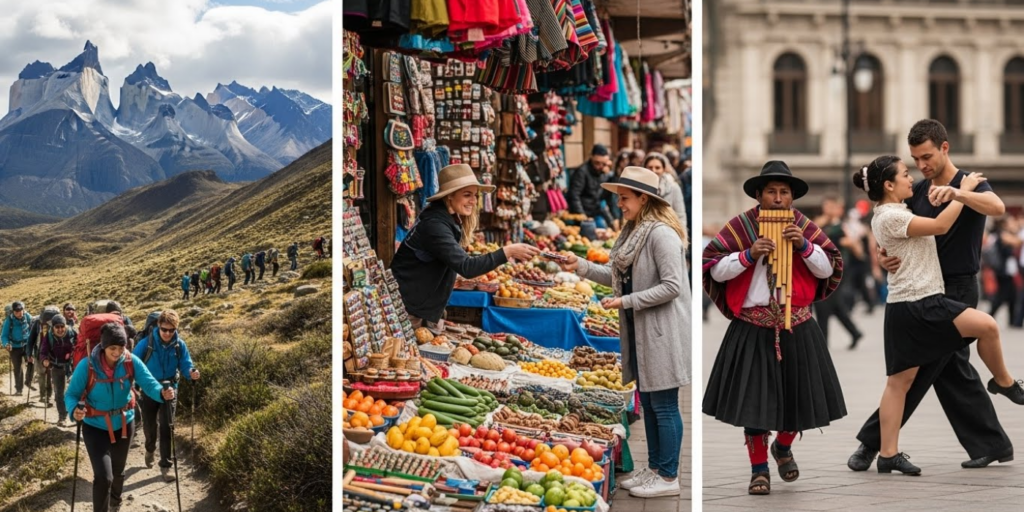
Some of South America’s best experiences cost nothing—or very little.
Free highlights:
- Hiking in Torres del Paine’s outer trails (Chile)
- Exploring Cartagena’s walled city or Quito’s historic center
- Watching sunset at Rio’s Pedra Bonita
- Wandering Sucre’s colonial streets (Bolivia)
Low-cost gems:
- Free walking tours (tip-based) in most major cities—great for orientation and local tips.
- Museums: Many offer free entry one day a week (e.g., MALI in Lima on Tuesdays).
- Local festivals and markets: Rich in culture, music, and food—all free to observe.
Skip the expensive tours: Instead of a $100 Machu Picchu guided hike, take the train to Aguas Calientes ($80 round-trip with student ID or early booking), then enter the site independently. You’ll save $200+.
Step 7: Protect Your Budget (and Yourself)
Smart money habits keep your trip stress-free:
- Use a no-foreign-transaction-fee card (like Charles Schwab or Capital One).
- Withdraw larger sums less often to minimize ATM fees.
- Carry a mix of cash and card—some rural areas are cash-only.
- Get travel insurance: World Nomads or SafetyWing cover medical, theft, and trip changes for under $50/month.
Emergency fund: Set aside 10% of your budget for surprises—missed buses, sudden rain gear needs, or that irresistible handmade alpaca sweater.
Conclusion
A budget-friendly trip to South America isn’t just possible—it’s incredibly rewarding. By choosing affordable destinations, traveling during shoulder season, using local transportation, eating street food, and staying in hostels or guesthouses, you can experience the continent’s stunning landscapes, rich cultures, and warm hospitality for far less than you might expect.
The key isn’t spending less—it’s spending wisely. Every dollar saved on a bus ticket or lunch is a dollar you can invest in a once-in-a-lifetime experience: a boat ride through the Amazon, a sunrise over the Andes, or a conversation with a Quechua weaver in the highlands.
South America doesn’t require a fortune—just curiosity, respect, and a little planning. So pack your lightest bag, brush up on your “hola,” and know that adventure is within reach.
Now we’d love to hear from you: Which South American country is calling your name? Have you traveled on a budget there before? Share your dream destination or best money-saving tip in the comments below—and if this guide inspired you, pass it on to a fellow traveler! The journey starts with a single step… and maybe a $3 empanada. 🌎✈️

James Anderson is a passionate enthusiast of travel, fine dining, financial freedom, and personal performance. Always seeking new experiences and challenges, he believes in living life fully while continuously improving himself. For James, exploring new destinations, savoring unique culinary experiences, and striving for independence are not just hobbies—they are a lifestyle built on curiosity, growth, and the pursuit of excellence.