Introduction
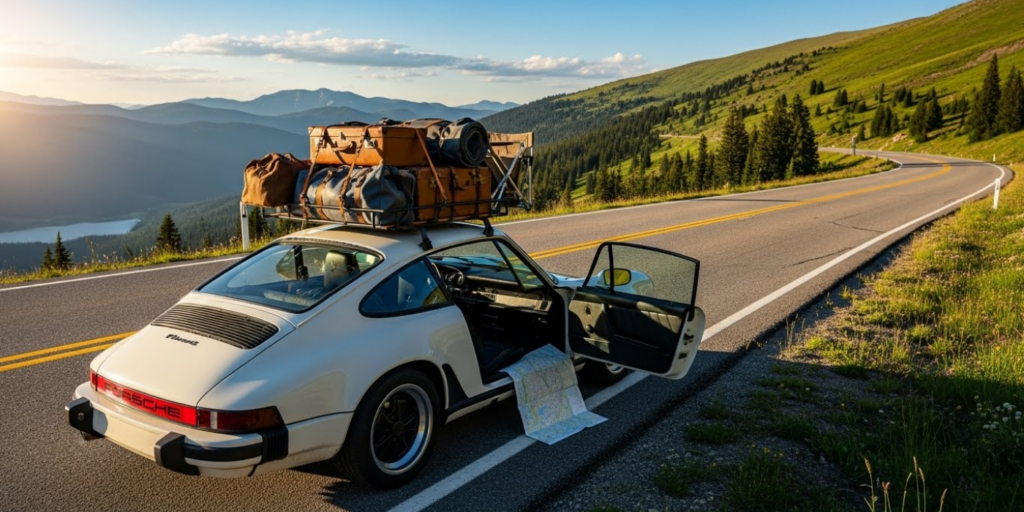
There’s a unique kind of freedom that comes with a road trip—windows down, music playing, and the open road stretching endlessly ahead. Now imagine that feeling, but with vineyard-draped hills of Tuscany outside your window, or the dramatic fjords of Norway unfolding around each bend. Driving abroad isn’t just travel; it’s total immersion—on your schedule, at your pace, with endless detours built in.
But let’s be honest: the idea of navigating foreign roads, rental agreements, and unfamiliar traffic laws can feel overwhelming. What if you get lost? What if you accidentally drive into a low-emission zone? What if your license isn’t valid?
The good news? With thoughtful planning, an international road trip can be smoother—and more rewarding—than a rigid guided tour. In this guide, we’ll walk you through everything you need to know to plan a stress-free road trip overseas, from choosing the right destination and understanding local driving rules to packing smart and using tech like a pro. Whether you’re dreaming of coastal highways in Portugal or mountain passes in New Zealand, you’ll learn how to turn “what ifs” into “wow moments.”
So grab your co-pilot, cue the playlist, and let’s hit the road—confidently.
1. Choose a Road-Trip-Friendly Destination
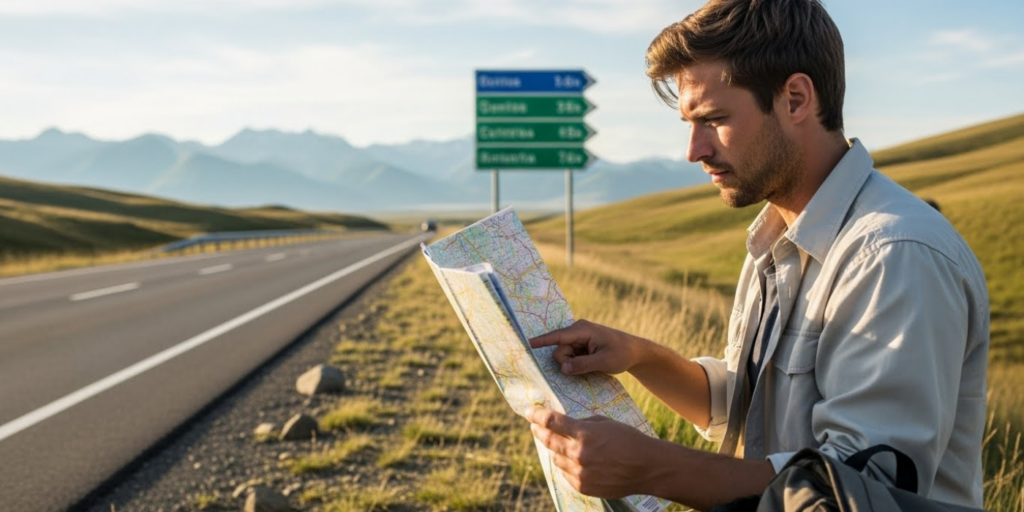
Not all countries are equally suited for self-drive adventures. The best international road trip destinations share a few key traits: well-maintained roads, clear signage (often in English), reliable rental infrastructure, and plenty of scenic routes with safe pull-offs.
Great beginner-friendly options include:
- Iceland: Ring Road (Route 1) circles the island with dramatic waterfalls, black sand beaches, and geothermal lagoons. Roads are modern, signage is bilingual, and distances are manageable.
- Portugal: The coastline from Lisbon to the Algarve offers charming villages, ocean views, and excellent highways. Gas stations and parking are plentiful.
- New Zealand: Both North and South Islands boast world-class drives like Milford Road, with English as the official language and left-hand driving that’s easy to adapt to.
- Canada: The Icefields Parkway in Alberta or the Cabot Trail in Nova Scotia offer jaw-dropping nature with North American-style road rules.
Avoid (for first-timers): Dense megacities with chaotic traffic (e.g., Bangkok, Cairo), countries with poorly marked rural roads, or places where automatic transmission cars are rare (much of Europe and Asia favor manuals).
Pro tip: Use resources like The Rough Guide to Driving Abroad or forums like Reddit’s r/travel to read real traveler experiences before deciding.
Remember: The goal isn’t just to cover miles—it’s to enjoy the journey. Choose a place where driving feels like part of the adventure, not a chore.
2. Understand Legal Requirements—Before You Book
Nothing ruins a trip faster than learning too late that your license isn’t valid or your rental insurance is void. Research legal essentials early—they vary widely by country.
Key things to verify:
- Driver’s license: Most countries accept U.S. licenses for short stays, but some (like Italy, Germany, or Japan) require an International Driving Permit (IDP). You can get one from AAA or the National Automobile Club for ~$20—just bring two passport photos and your valid U.S. license. Note: An IDP is not a standalone license—it must be used with your U.S. license.
- Minimum driving age: In many countries (e.g., Ireland, Greece), you must be 21+ to rent a car—and under 25 may incur “young driver” fees.
- Insurance: Rental companies often push expensive coverage, but your credit card or personal auto policy might already include international rental protection. Call ahead to confirm.
- Local laws: In some places, it’s illegal to turn right on red (common in Europe), or you must carry warning triangles, reflective vests, or breathalyzers in the car (required in France, Spain, and others).
Real example: A traveler in Italy was fined €700 for entering a ZTL (Limited Traffic Zone) in Florence—a common trap for tourists. Apps like Google Maps now warn about these, but always double-check.
Action step: Bookmark your destination’s U.S. Embassy page—they often have a “Driving Abroad” section with up-to-date rules.
3. Book Your Rental Car Smartly—Save Money & Avoid Surprises
Rental car scams and hidden fees are rampant overseas. Protect yourself with these strategies:
- Book in advance—but not too far: Reserve 1–3 months out for the best rates and selection. Last-minute bookings in peak season can be 2–3x more expensive.
- Compare total price, not just daily rate: Use aggregators like Rentalcars.com, Kayak, or Auto Europe, but always check the rental company’s own website too—sometimes they offer exclusive deals.
- Choose the right car size: In Europe, narrow streets and tiny parking spots make compact or subcompact cars ideal. In Iceland or Norway, consider AWD for mountain roads—even in summer.
- Decline unnecessary insurance: If your credit card offers collision damage waiver (CDW) and you have personal coverage, you likely don’t need the rental company’s “super CDW” or “glass protection.”
- Read the fuel policy: “Full-to-full” is standard—return the car with the same fuel level you received it. Avoid “prepaid fuel” options—they’re almost always overpriced.
Red flag: If the rental desk insists on a large cash deposit or pressures you to upgrade “for your safety,” stay calm but firm. Take photos of the car’s condition before driving off.
Bonus: Ask for a car with built-in GPS or ensure your phone mount works. Many rural areas have poor cell service—download offline maps (Google Maps or Maps.me) ahead of time.
4. Plan Your Route with Flexibility—and Safety—in Mind
Unlike domestic road trips, abroad you may face language barriers, limited gas stations, or seasonal road closures. Plan your route thoughtfully—but leave room for spontaneity.
Start with a loose skeleton itinerary:
- Drive no more than 3–4 hours per day. Foreign driving is more mentally taxing—narrow roads, roundabouts, unfamiliar signs.
- Identify key stops with amenities: towns with supermarkets, ATMs, and pharmacies.
- Check road conditions: In mountainous or remote regions (e.g., Scottish Highlands, Patagonia), roads may close due to weather. Use official sites like Iceland Road Administration (Vegagerðin) or NZ Transport Agency for real-time updates.
Tech tools that help:
- Waze: Crowdsourced traffic and police alerts (works in many countries)
- Park4Night or iOverlander: Find safe, legal overnight parking or campsites
- Fuelio: Track fuel costs and find cheapest gas stations in Europe
Also, plan for parking: In historic European cities, street parking is scarce and expensive. Look for park-and-ride lots on the city outskirts, or choose accommodations with included parking.
Story: On a road trip through Croatia, a friend skipped Dubrovnik’s chaotic center and parked at a hillside B&B just outside. She got stunning views, free parking, and a 10-minute walk to the Old Town—no stress.
Remember: The best detours are often unplanned—but only if you’ve built in time and safety margins.
5. Pack Like a Pro—Essentials You Might Forget
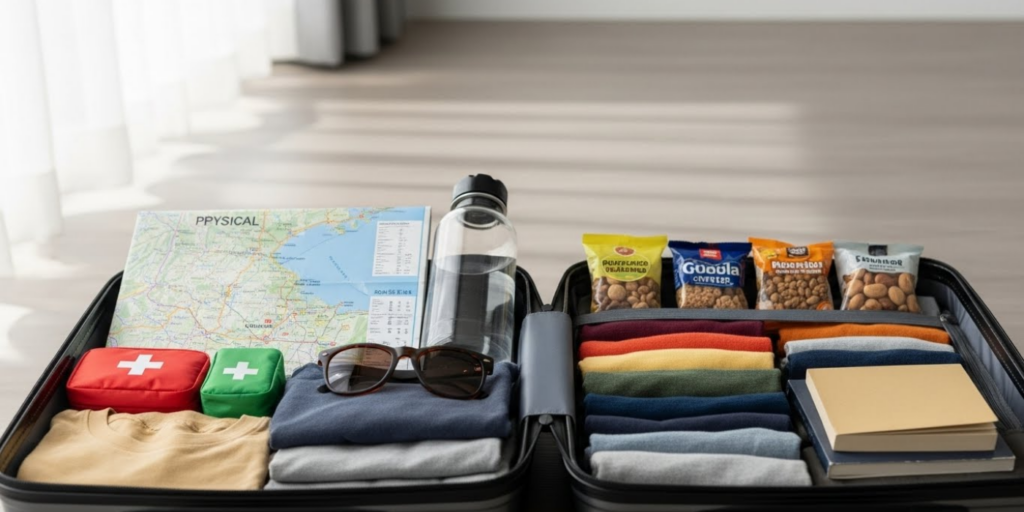
Packing for an international road trip goes beyond clothes and toiletries. Bring gear that keeps you safe, legal, and comfortable:
- Universal power adapter with USB ports (car chargers may not fit)
- First-aid kit (required in some countries like Germany and Austria)
- Reusable water bottles and snacks (rural areas may lack convenience stores)
- Physical map or downloaded offline maps (cell service drops in mountains and islands)
- Emergency kit: flashlight, jumper cables, blanket, and basic toolkit
- Cash in local currency (many rural gas stations, toll booths, or parking meters don’t accept cards)
Don’t overlook comfort: A neck pillow, seat cushion, and sunglasses with polarized lenses reduce fatigue on long drives.
Also, pack light: Trunk space in European compacts is limited. Use soft, collapsible bags instead of hard suitcases.
Mindset tip: Think like a local driver—not a tourist. They carry water, know alternate routes, and never assume gas is nearby. Be prepared, and you’ll drive with confidence.
6. Embrace the Journey—Not Just the Destination
The magic of an international road trip isn’t in ticking off landmarks—it’s in the in-between moments: sharing fresh bread with a sheepdog in the Pyrenees, getting directions from a baker in a Sicilian village, or watching sunset over an empty beach in the Algarve.
To stay present:
- Build in “zero days”—days with no driving, just exploring one place deeply.
- Talk to locals: Ask for their favorite hidden viewpoint or family-run trattoria.
- Let go of perfection: Missed a turn? Got caught in rain? These become your best stories.
Final reflection: A road trip abroad is more than a vacation—it’s a masterclass in adaptability, observation, and human connection. The wrong turn might lead to your favorite meal. The language barrier might spark a heartfelt gesture. The open road becomes your teacher.
Conclusion
Planning a road trip abroad doesn’t have to be daunting. By choosing a driver-friendly destination, understanding legal requirements, booking your rental wisely, mapping your route with care, packing essential gear, and staying open to serendipity, you set yourself up for an adventure that’s both smooth and soulful.
The freedom of the open road transcends borders—but it’s amplified when you’re prepared. So do your homework, trust your instincts, and remember: the best journeys aren’t measured in miles, but in moments that change you.
Your dream drive is waiting—whether it’s along Ireland’s Wild Atlantic Way or through the lavender fields of Provence. All you need is a plan, a full tank, and the courage to turn the key.
We’d love to hear from you! Have you taken a road trip abroad? What surprised you most—good or bad? Share your tips, favorite routes, or lessons learned in the comments below. Your story might be the spark someone needs to plan their own unforgettable journey. 🚗🌍✨

James Anderson is a passionate enthusiast of travel, fine dining, financial freedom, and personal performance. Always seeking new experiences and challenges, he believes in living life fully while continuously improving himself. For James, exploring new destinations, savoring unique culinary experiences, and striving for independence are not just hobbies—they are a lifestyle built on curiosity, growth, and the pursuit of excellence.