
Introduction
There’s something magical about hitting the open road—the hum of tires on asphalt, windows down, music playing, and a landscape unfolding like a living postcard. In a world of packed flights and rigid itineraries, a road trip offers freedom, flexibility, and front-row seats to America’s most breathtaking beauty. From misty coastal cliffs to sun-drenched desert canyons, the United States is packed with drives so stunning, they feel like scenes from a movie.
But with so many options, where do you start? Whether you have a weekend or two weeks, whether you’re chasing waterfalls, wildflowers, or wide-open skies, the right route can turn a simple drive into a lifelong memory.
In this guide, we’ll take you through five of the most scenic road trips across the USA—each offering unique landscapes, iconic stops, and unforgettable moments. You’ll get practical tips on timing, must-see viewpoints, and lesser-known gems along the way. Plus, we’ll share how to plan like a pro so your journey is as smooth as it is spectacular. So buckle up, fill your tank, and let’s explore the roads less ordinary—where every mile tells a story.
Pacific Coast Highway (California): Ocean Cliffs and Golden Sunsets
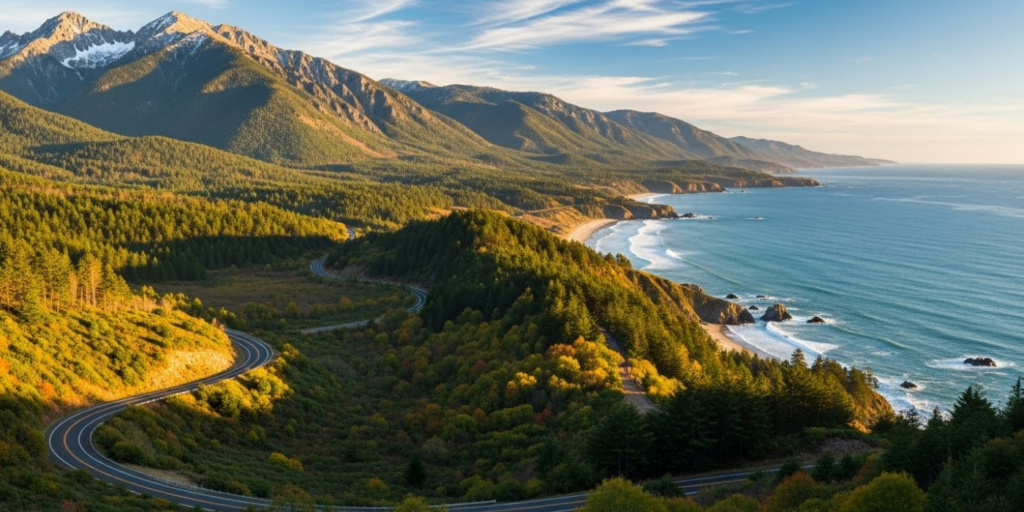
Ask anyone to picture the ultimate American coastal drive, and they’ll likely describe California’s Highway 1, also known as the Pacific Coast Highway (PCH). Stretching from San Francisco to San Diego (or vice versa), this 500-mile route hugs dramatic cliffs, winds through redwood forests, and offers endless views of the Pacific Ocean.
The crown jewel? Big Sur—a rugged 90-mile stretch between Carmel and San Simeon. Here, the Santa Lucia Mountains plunge straight into the sea, and landmarks like Bixby Creek Bridge and McWay Falls (an 80-foot waterfall that spills directly onto a beach) will have you pulling over every few miles.
Best time to go: Late spring (May–June) or early fall (September–October). Summer brings fog and crowds; winter can mean road closures due to landslides.
Don’t-miss stops:
- Point Reyes National Seashore (just north of San Francisco) for tule elk and lighthouse views
- Hearst Castle in San Simeon—a Gilded Age mansion perched on a hill
- Santa Barbara’s Stearns Wharf for fresh seafood and sunset strolls
Pro tip: Drive north to south if possible. That way, you’ll be on the ocean side of the road, giving you unobstructed views without crossing traffic.
While it’s tempting to rush, slow down. This isn’t a race—it’s a sensory experience. Let the salt air fill your lungs, stop at a roadside stand for fresh strawberries, and watch sea otters bob in the kelp forests. The PCH isn’t just a drive; it’s a love letter to the West Coast.
Blue Ridge Parkway (Virginia to North Carolina): A Ribbon Through the Sky

Winding 469 miles through the Appalachian Highlands, the Blue Ridge Parkway is often called “America’s Favorite Drive”—and for good reason. Connecting Shenandoah National Park in Virginia to Great Smoky Mountains National Park in North Carolina, this scenic byway offers rolling mountains, misty valleys, and over 250 miles of hiking trails.
What makes it special? No stoplights, no billboards, and minimal commercial traffic. The speed limit rarely exceeds 45 mph, encouraging you to savor every curve. In autumn, the parkway explodes in fiery reds, oranges, and golds. In spring, rhododendrons and mountain laurels blanket the slopes in pink and white.
Top overlooks:
- Craggy Gardens (Milepost 364): Panoramic views and easy trails through purple rhododendron tunnels
- Linn Cove Viaduct (Milepost 304): An engineering marvel that wraps around Grandfather Mountain
- Mabry Mill (Milepost 176): A restored 1905 water-powered gristmill—perfect for photos
Plan ahead: The parkway is closed in winter at higher elevations due to snow and ice. Late May through October is ideal.
Bonus: You’re never far from Appalachian culture. Stop in Asheville, NC, for craft breweries and Biltmore Estate, or Roanoke, VA, for bluegrass music and farm-to-table dining. This route isn’t just about scenery—it’s a window into a region rich with heritage, music, and resilience.
Route 66: The Mother Road’s Nostalgic Charm
While much of historic Route 66 has been replaced by interstates, the 2,400-mile stretch from Chicago to Santa Monica still pulses with vintage Americana. This isn’t a drive for pristine nature—it’s a journey through mid-century nostalgia, quirky roadside attractions, and small-town soul.
You’ll pass neon-lit motels, giant fiberglass dinosaurs, and diners where the pie is still homemade. Iconic stops include:
- Cadillac Ranch in Amarillo, Texas—ten vintage Caddies buried nose-down in a field, covered in ever-changing graffiti
- Petrified Forest National Park in Arizona—where ancient trees turned to stone
- Santa Monica Pier—the official “End of the Trail” with its Ferris wheel and Pacific views
Why drive it today? Because Route 66 is more than asphalt—it’s a cultural time capsule. It carried Dust Bowl migrants west, inspired countless songs and films, and symbolizes the American spirit of reinvention.
Travel tip: Don’t try to do the whole route at once. Break it into segments: Chicago to St. Louis, Oklahoma’s stretch (the only state the route crosses entirely), or Arizona to California. Use the Route 66 Association’s maps to find preserved sections and authentic diners.
And embrace the detours. The best moments often happen off the main path—like chatting with a gas station owner who’s lived there for 50 years or discovering a mural painted by a local artist. Route 66 reminds us that sometimes, the destination is the journey itself.
Going-to-the-Sun Road (Montana): Alpine Majesty in Glacier National Park
Tucked inside Glacier National Park, the Going-to-the-Sun Road is a 50-mile engineering wonder that crosses the Continental Divide at Logan Pass (6,646 feet). Open only from late June to mid-October due to heavy snowfall, this road delivers some of the most dramatic alpine scenery in the Lower 48.
Expect glacial valleys, turquoise lakes, cascading waterfalls, and wildlife sightings—grizzly bears, mountain goats, and bighorn sheep are common. The road clings to cliffsides with no guardrails in places, making for heart-pounding (but safe) views.
Must-see spots:
- Lake McDonald: The park’s largest lake, with crystal-clear waters reflecting surrounding peaks
- Weeping Wall: A series of waterfalls that “weep” directly onto the road—bring a raincoat if driving through!
- Hidden Lake Overlook: A short hike from Logan Pass with jaw-dropping views and frequent goat sightings
Important notes:
- Vehicle restrictions: RVs over 21 feet aren’t allowed between Avalanche Campground and Sun Point.
- Reservations: From May–September, you need a timed entry permit—book months in advance via recreation.gov.
- Fill your gas tank beforehand: There’s no fuel in the park.
This drive is humbling. Standing at Logan Pass, with wind whipping through wildflowers and glaciers gleaming in the distance, you feel small in the best way—in awe of nature’s scale and silence. It’s a reminder that some places still feel untouched, even in the 21st century.
Hana Highway (Maui, Hawaii): A Tropical Paradise Unfolds
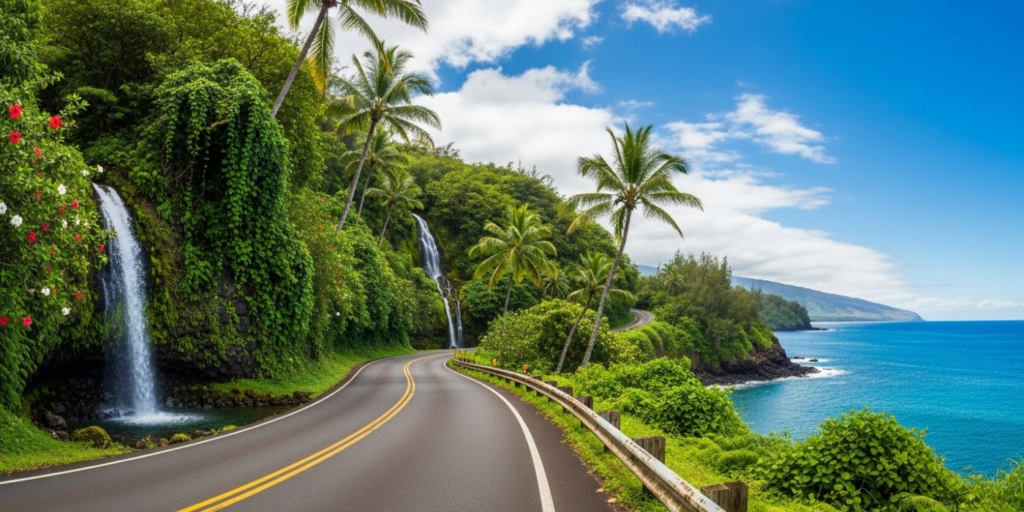
For something completely different, fly to Maui and take on the Hana Highway—a 64-mile ribbon of road that winds through rainforests, past black-sand beaches, and alongside countless waterfalls. With 620 curves and 59 bridges (many one-lane), this isn’t a drive for the impatient—but for those willing to slow down, it’s pure magic.
You’ll pass banana groves, bamboo forests, and ocean vistas that shift from deep blue to emerald green. The journey is the destination; signs warn, “Don’t rush—this is paradise.”
Top stops:
- Twin Falls: An easy hike to multiple cascades (perfect for a morning dip)
- Ke’anae Peninsula: A quiet fishing village with fresh banana bread sold roadside
- Wai’anapanapa State Park: Home to Hawaii’s famous black-sand beach and sea caves
Tips for success:
- Start early (before 7 a.m.) to avoid traffic and secure parking
- Download an audio guide app (like Shaka Guide) for real-time storytelling
- Respect private property—many “hidden” waterfalls are on land owned by locals
Unlike mainland routes, Hana Highway immerses you in aloha spirit—a blend of natural beauty, cultural respect, and mindful travel. It’s not just a drive; it’s a meditation in motion.
Planning Your Perfect Road Trip: Practical Tips for Success
No matter which route you choose, smart planning ensures smooth sailing:
- Check road conditions: Sites like NPS.gov or state DOT pages post real-time updates on closures.
- Book lodging early: Especially in national parks or peak seasons.
- Pack essentials: First-aid kit, phone charger, cooler with water, and offline maps (cell service vanishes in remote areas).
- Embrace flexibility: The best discoveries—like a hidden café or a wildflower meadow—often aren’t on the map.
Also, consider renting a comfortable vehicle with good gas mileage or, for longer trips, a campervan for ultimate freedom.
Remember: a road trip isn’t about checking boxes. It’s about presence—watching light shift on canyon walls, sharing stories around a campfire, or simply sitting in silence as the sun sets over the ocean.
Conclusion
The USA’s most scenic road trips offer more than just views—they offer transformation. Whether you’re cruising the ocean-kissed curves of the Pacific Coast Highway, stepping back in time on Route 66, or breathing in the alpine air of Glacier National Park, these journeys reconnect us with nature, history, and ourselves. In a fast-paced world, they remind us to slow down, look around, and appreciate the miles between destinations.
So pick a route that calls to your soul, pack your curiosity (and a good playlist), and go. You don’t need a fancy car or a huge budget—just an open mind and a sense of adventure.
Which of these road trips is on your bucket list? Have you driven one and discovered a secret spot we didn’t mention? Share your stories in the comments—we’d love to live vicariously through your adventures! And if this guide inspired you, pass it along to a fellow traveler who’s ready to hit the road and see America in all its glorious diversity. Happy travels!

James Anderson is a passionate enthusiast of travel, fine dining, financial freedom, and personal performance. Always seeking new experiences and challenges, he believes in living life fully while continuously improving himself. For James, exploring new destinations, savoring unique culinary experiences, and striving for independence are not just hobbies—they are a lifestyle built on curiosity, growth, and the pursuit of excellence.