
Introduction
Ever boarded a plane only to find yourself wedged between two strangers, stuck behind a reclining seat, or crammed into a middle spot with no escape for hours? You’re not alone—and it’s not just bad luck. The secret to a more comfortable, less stressful flight often comes down to one simple decision: where you sit.
While you can’t control turbulence or delayed baggage, you can choose a seat that maximizes legroom, minimizes noise, speeds up boarding or deplaning, and even boosts your odds of uninterrupted sleep. And the best part? You don’t need to pay for business class to get it.
In this guide, we’ll walk you through proven strategies for picking the best seat on any flight, whether you’re flying budget across the U.S. or internationally in economy. You’ll learn how to read seat maps like a pro, which seats to avoid at all costs, and how to use free tools and timing tricks to snag premium spots—even on basic fares.
Because a great seat won’t just make your flight more bearable—it might just turn a dreaded chore into a surprisingly pleasant part of your journey.
1. Know Your Priorities: Comfort, Convenience, or Speed?
Before you even look at a seat map, ask yourself: What matters most on this trip?
- Need extra legroom? You’ll want an exit row or bulkhead seat.
- Traveling with kids? Aisle seats near the front help with bathroom runs and deplaning.
- Flying solo and want to sleep? A window seat in the front 1/3 of the cabin is quieter and smoother.
- Anxious flyer? Avoid the rear—turbulence feels stronger near the tail.
- Quick connection? Choose a seat near the front exit to deplane faster.
Your ideal seat changes based on your needs. A business traveler might prioritize quiet and recline space, while a family with toddlers needs easy bathroom access and proximity to flight attendants.
Real-life example: Sarah, a frequent flyer, always picks a front window seat on red-eyes: “I sleep better, get served meals first, and am off the plane before the rush.” Meanwhile, her friend Marco, who travels with his elderly parents, books bulkhead aisle seats for easier movement and floor space for bags.
Knowing your “why” turns seat selection from guesswork into strategy.
2. Decode the Seat Map: What Those Letters and Symbols Really Mean
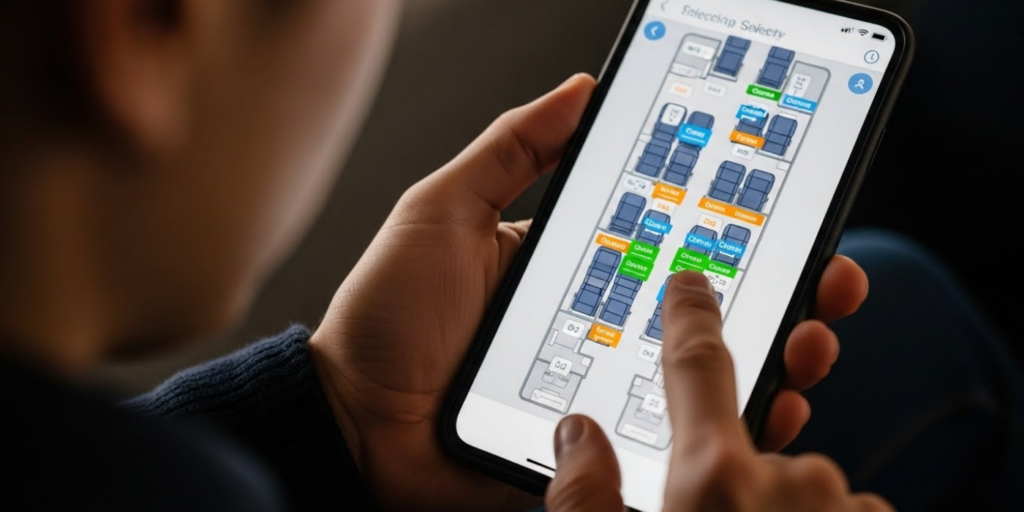
Most airlines publish seat maps during booking—but the key is knowing how to read between the lines.
Common seat labels:
- A and F = Window seats (on wide-body planes, it might be A, D, G, K)
- C and D = Aisle seats on many narrow-body jets (like Boeing 737s)
- Middle seats = B, E, or others—avoid if possible!
Symbols to watch for:
- Green checkmark or “Preferred”: Extra legroom (may cost $15–$60)
- Red X or “Blocked”: Often reserved for elite flyers or families—may open 24–48 hours before departure
- Grayed-out seats: May be unavailable due to weight balance or maintenance
Use SeatGuru or Aerolopa:
These free websites show detailed aircraft layouts, including:
- Which seats have limited recline (often near galleys or bulkheads)
- Which exit rows offer the most legroom
- Where the bathrooms and galleys are (avoid seats directly in front—they get constant foot traffic)
Pro tip: On long-haul flights, upper deck seats (like on the A380) are quieter and more exclusive—even in economy.
Don’t just pick the first available seat—study the map like a flight attendant would.
3. Best (and Worst) Seats by Aircraft Section
Not all parts of the plane are created equal. Here’s a quick breakdown:
Front of the plane:
✅ Pros: Quieter, less turbulence, faster service, first to deplane
❌ Cons: Often reserved for elites or sold as “preferred” seating
💡 Tip: Even in economy, front rows are worth the small upgrade fee if you’re tall or value peace.
Middle section:
✅ Pros: Closer to bathrooms and galleys
❌ Cons: More foot traffic, louder, harder to sleep
💡 Avoid if you’re sensitive to light or noise.
Rear of the plane:
✅ Pros: Sometimes cheaper; flight attendants may offer extra snacks if leftovers remain
❌ Cons: Loudest (engines), bumpiest, last to deplane, warmest (heat rises)
💡 Only choose if you’re short, budget-conscious, and don’t mind the ride.
Aisle vs. Window:
- Aisle: Easier bathroom access, less feeling of confinement
- Window: Privacy, headrest for sleeping, unbeatable views
- Middle: Almost never ideal—only acceptable on short flights
Special note: On Airbus A320 family planes, seat 12A often has extra legroom because of a missing seat in front—but it’s right next to the lavatory. Trade-offs matter!
4. Use Timing and Tools to Get Better Seats for Free
You don’t always need to pay for a good seat—strategy can get you one for free.
Book early—but check again later:
- Some airlines (like Delta and United) reserve the best seats for elite members at first.
- 48–24 hours before departure, more seats often open up as elites finalize plans.
- Use ExpertFlyer (free version available) to set alerts for newly released seats.
Check in exactly 24 hours before:
Most airlines open check-in at the 24-hour mark. Have your app ready—prime seats often go within minutes.
Use airline apps over third-party sites:
If you book through Expedia or Kayak, you might not get full seat selection until check-in. Booking directly with the airline gives you immediate access to seat maps and loyalty perks.
Call the airline:
Sometimes, agents can assign better seats than the website shows—especially if you mention a special need (pregnancy, disability, traveling with a child).
Elite status or credit cards:
Even without status, some travel credit cards (like Chase Sapphire or Amex Platinum) offer free seat selection or priority boarding—check your benefits.
Real win: Traveler Jen scored a bulkhead exit row on a transatlantic flight by checking in the second the 24-hour window opened—no fee, just timing.
5. Avoid These Seats at All Costs
Some seats look fine on the map but are secretly terrible. Here’s your “avoid” list:
- Seats in front of an exit row: You can’t recline—ever.
- Last row on any plane: No recline, noise from the lavatories, and you’re the last off.
- Seats near bathrooms or galleys: Constant light, noise, and queuing passengers.
- Middle seats in 3–3 or 3–4–3 configurations: You’ll be climbing over people all flight.
- Seats with misaligned windows: Your view will be a sliver of sky or a wing edge.
- “Cockpit-facing” bulkhead seats with bassinet tables: On overnight flights, babies may be strapped right in front of you.
Pro tip: On Boeing 777/787, some window seats in the rear have curved walls that make it hard to lean—check SeatGuru’s photos before choosing.
A few extra minutes of research can save you hours of discomfort.
6. Special Considerations: Families, Solo Travelers, and Anxious Flyers
Tailor your choice to your travel style:
For families:
- Book together in a row early—don’t rely on the airline to seat you together.
- Choose bulkhead rows for bassinets (if flying with an infant).
- Avoid exit rows—children under 15 can’t sit there.
For solo travelers:
- Window seats offer privacy and a “wall” to lean against.
- On red-eyes, pick seats ahead of the wing—less engine noise.
- Consider singles-friendly airlines like JetBlue (with solo “Even More Space” seats).
For nervous flyers:
- Sit over the wings—this is the most stable part of the plane during turbulence.
- Choose daytime flights when possible—visual cues reduce anxiety.
- Use aisle seats if you fear feeling trapped.
For tall passengers:
- Prioritize exit rows or bulkheads—but confirm legroom on SeatGuru (some are tighter than they look!).
- Avoid regional jets (like CRJ-200s)—they have notoriously tight pitch.
Remember: the “best” seat is the one that matches your body and your journey.
Conclusion
Choosing the best seat on a flight isn’t about luck—it’s about awareness, timing, and knowing what to look for. Whether you’re chasing extra legroom, a quiet corner for sleep, or a lightning-fast exit, smart seat selection can transform your flying experience from grueling to surprisingly smooth.
You don’t need to splurge on premium cabins to fly comfortably. With free tools like SeatGuru, strategic timing, and a clear sense of your priorities, you can often find excellent seats—even on basic economy fares.
So next time you book a flight, don’t just click “random seat assignment.” Take five minutes to research, plan, and choose with intention. Your back, your sleep, and your sanity will thank you.
We’d love to hear from you!
What’s your go-to seat strategy? Have you ever scored an amazing seat by accident—or learned a hard lesson from a bad one? Share your tips and stories in the comments below—and don’t forget to pass this guide to a fellow traveler who’s tired of middle seats! Safe and comfortable travels! ✈️💺

James Anderson is a passionate enthusiast of travel, fine dining, financial freedom, and personal performance. Always seeking new experiences and challenges, he believes in living life fully while continuously improving himself. For James, exploring new destinations, savoring unique culinary experiences, and striving for independence are not just hobbies—they are a lifestyle built on curiosity, growth, and the pursuit of excellence.